
Travel is becoming more digital by the year as passengers now book journeys on their phones, generate electronic bag tags, verify their identity with biometrics and move through airports with fewer document checks.
According to IATA’s 2025 Global Passenger Survey, 78% of passengers want to use a smartphone combining their digital wallet, passport and loyalty cards. Half have already used biometrics during an airport journey.
Yet every digital journey eventually meets the physical world: A passenger has to check in, print a ticket, pay a fare, drop a bag, retrieve information or change a booking. When their phone is unavailable, a document cannot be verified or a journey changes unexpectedly, the self-service kiosk becomes critical.
This is where digital ambition is tested because if the kiosk assumes that every traveller can see a touchscreen, reach every control, perform precise gestures, read small text or respond within a short timeout, the journey stops. The technology may be operational. The service has still failed.
A Touchscreen Is Not a Complete Interface
Touchscreens have undoubtedly transformed self-service – they are flexible, familiar and easy to update and can also remove the physical reference points that many people need to operate independently. That being said, a traveller with limited or no vision may be unable to locate an on-screen control; someone with reduced dexterity may struggle with small targets, swiping gestures or tightly timed interactions; a wheelchair user may be unable to reach the screen, card reader or passport scanner. Glare, background noise, cognitive load and unfamiliar language can make the same kiosk difficult for many more passengers.
Disability is only part of the picture to consider – a parent travelling with children, a passenger carrying luggage, someone recovering from an injury and an older traveller experiencing changes in sight or movement may all benefit from a clearer, more flexible interface.
At Storm, the test for good self-service is straightforward:
Can someone complete the journey independently?
That question reaches beyond compliance and goes to the heart of customer experience and operational performance.
Every traveller who completes a routine transaction independently keeps the journey moving. Queues remain shorter. Staff can focus on disruptions and passengers who need personal assistance. Kiosk utilisation improves. The organisation receives more value from the infrastructure it has already purchased.
When someone cannot use a kiosk, the cost appears elsewhere:
- A member of staff has to intervene.
- Transaction time increases.
- Queues grow around the point of failure.
- The passenger loses confidence in self-service.
- A purchase, upgrade or booking may be abandoned.
- The same barrier returns on the next journey.
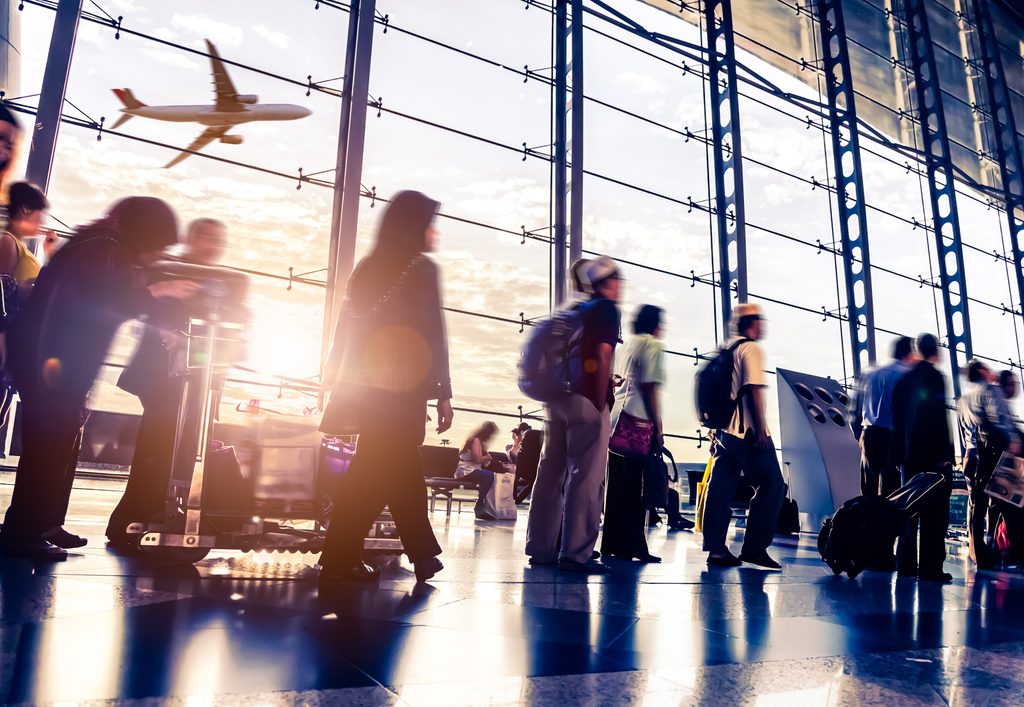
In a busy airport or station, a small usability problem does not stay small for long. It repeats across thousands of interactions and accessible self-service helps to remove that friction at source.
The World Health Organization estimates that 1.3 billion people – around one in six of the global population – experience a significant disability. It also reports that people with disabilities find inaccessible and unaffordable transport 15 times more difficult than people without disabilities.
Population ageing makes inclusive design more urgent. United Nations projections indicate that the number of people aged 65 or over will rise from 761 million in 2021 to 1.6 billion by 2050.
These passengers represent substantial commercial value. The Open Doors Organization’s 2024 market study found that American travellers with disabilities spent almost $50 billion on their own travel over a two-year period.
Their expectations are hardly unusual – they want to research, book, pay and travel with the same confidence as anyone else and often remember the organisations that make this possible. They also remember the ones that leave them waiting for help.
For travel brands competing on convenience and loyalty, accessibility shapes the experience customers associate with the brand.
Regulation Is raising the floor
Accessibility requirements for transport and self-service technology continue to develop across markets.
The European Accessibility Act became applicable across the EU in June 2025. Its scope includes ticketing and check-in machines, along with services connected to air, bus, rail and waterborne passenger transport. The European Commission describes common accessibility rules as a way to reduce barriers, expand market opportunities and make transport easier to access.
In the United States, Department of Transportation rules require covered airlines and airport operators to provide accessible automated kiosks at qualifying airports. At least 25% of kiosks in each location must meet the relevant requirements, and accessible kiosks must offer the same functions as the other kiosks around them. The rules also require them to be identifiable and maintained in working condition. The full requirements are published in the Federal Register.
Requirements vary between jurisdictions, applications and transport modes. Compliance teams need to understand the rules that apply to each deployment.
The practical goal should extend further: create a self-service experience that more people can complete, in real operating conditions, without assistance.
What accessible self-service in the travel sector looks like
Accessibility rarely comes from a single component; it comes from choices working together across the complete interaction.
A well-designed kiosk may include:
- Tactile controls that can be located and operated without sight.
- Audio instructions with private listening through a headphone connection.
- Screen-reader support and clear text-to-speech guidance.
- High-contrast displays, adjustable text and visible focus states.
- Controls positioned within accessible reach ranges.
- Operation without tight grasping, pinching or wrist twisting.
- More than one way to complete important actions.
- Clear confirmation when an instruction or payment has been accepted.
- Enough time to understand and respond to each prompt.
- Consistent access to every function offered by the kiosk.
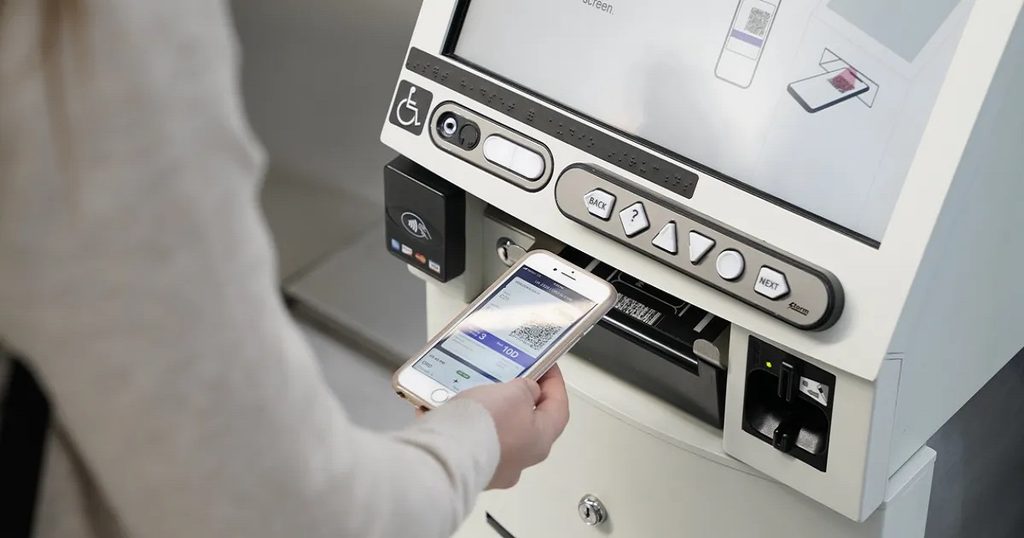
An “accessible” kiosk that handles check-in but cannot process a bag, change a seat or take payment still leaves part of the journey inaccessible.
Accessible design also has to survive contact with the transport environment. Hardware may face constant use, spills, impact, dirt, vibration, weather and attempts at vandalism. Audio has to work in a crowded terminal. Tactile controls have to remain distinct after millions of interactions. Software updates cannot quietly disable the features passengers depend on.
At Storm, we believe reliability is part of accessibility and the interface must offer choice
There is no single mode of interaction that works for every passenger.
Voice control may help someone who cannot operate a touchscreen or keypad. It may be unsuitable for a passenger who is non-verbal, hard of hearing or standing in a noisy terminal. Audio guidance can give a blind traveller independent access, while tactile controls provide the physical landmarks needed to follow it. Visual instructions remain important for passengers who cannot use audio.
The strongest self-service systems are multimodal and allow the traveller to choose how to interact.
Storm Interface’s accessible keypads provide tactile, high-contrast controls designed for demanding public environments. Audible feedback options can support passengers with visual impairments, while raised and contoured keys help people who find touchscreen gestures difficult.
Storm’s voice-activation controls introduce a hands-free input option for applications such as transport ticketing and passenger information. The Microphone Activation Sensor was designed in consultation with the Royal National Institute of Blind People and has received RNIB Tried & Tested certification.
The Storm Accessibility Suite connects the physical interface with screen-reader functionality, text-to-speech, language options and centralised management. This makes accessibility easier to deploy, monitor and update across a large kiosk estate.
Together, these components support a journey that can be seen, heard and navigated by touch.
At Storm, accessibility starts before the kiosk is installed
Some of the most expensive accessibility decisions are made before anyone realises they are accessibility decisions. For example:
· The height of the screen.
· The location of the card reader.
· The available space for a wheelchair.
· The choice of operating system.
· The kiosk enclosure.
· The software architecture.
· The way a user activates audio guidance.
Once thousands of kiosks have been manufactured and deployed, changing those decisions becomes slow and costly.
Travel and transportation organisations need to bring accessibility into the project while the customer journey, hardware and software are still being defined. That means involving accessibility specialists, integration partners and people with lived experience early enough to influence the design.
It also means testing the complete journey.
A component can meet its specification while the interaction around it remains confusing. A headphone socket is of little value if a blind passenger cannot find it. A tactile keypad cannot help if the software does not provide meaningful audio instructions. An accessible kiosk cannot serve passengers if staff routinely switch it off or use the surrounding floor space for storage.
At Storm, we believe the system has to work as a system.
From accessible hardware to an accessible operation
For organisations with existing kiosks, the first step is understanding where the barriers are.
Storm Interface’s accessibility audit and consultancy service examines physical reach, private audio, tactile controls, visual presentation, one-handed operation and the wider digital experience. From there, Storm can help organisations prioritise changes, plan integration and support deployment.
That approach gives executives a clear view of risk and investment. It gives customer-experience teams evidence from the real journey. Procurement teams receive practical requirements. Designers and engineers know what has to work together before the kiosk reaches the terminal floor.
Accessibility becomes measurable, manageable and connected to operational performance.
Building a journey more people can complete
Travel is full of moments passengers cannot control: delays, unfamiliar terminals, changing gates, missing documents and last-minute decisions.
We believe self-service should reduce that stress and give people a reliable way forward.
For nearly four decades, Storm Interface has helped organisations create durable, accessible interfaces for public environments. Our role now extends from specialist hardware to the full self-service journey: auditing existing systems, advising project teams, supporting integration and helping organisations maintain accessibility across their kiosk estate.
If you are planning a new self-service deployment or want to understand the barriers within an existing one, start with an accessibility consultation.
Because the best measure of a travel kiosk is not how advanced it looks.
It is how many travellers can use it confidently, independently and without delay.
Key sources: