

Accessibility has evolved with the way people live, work and interact with organisations.
Thirty years ago, most customer journeys involved visiting a building, speaking to staff or making a phone call. Today, many take place through websites, mobile apps, self-service kiosks, payment terminals, digital identity systems and artificial intelligence.
Each wave of innovation has made services faster, more convenient and easier to scale. It has also created new barriers when people’s physical, sensory or cognitive needs were not considered at the design stage, and many organisational accessibility strategies have not kept pace.
Most organisations recognise the importance of physically accessible buildings, and many have invested in accessible websites, applications and digital content. But customer journeys now extend far beyond buildings and websites. In retail, healthcare, transport, financial services, hospitality and the public sector, people are increasingly expected to complete complex transactions without speaking to anyone.
They order food from touchscreens, register for hospital appointments at kiosks, buy tickets from machines, verify their identity remotely and seek help from AI assistants.
This changes the question organisations must ask. Accessibility now means asking whether every customer can complete the full journey easily, confidently and independently.
At Storm Interface, we view the development of accessibility in three generations:
Accessibility 1.0: Physical Access
Can people reach us and enter the places where services are delivered?
Accessibility 2.0: Service Access
Can people access our information, products and services through digital channels?
Accessibility 3.0: Independent Access
Can every customer complete the full journey independently, whatever technologies are involved?
Each generation reflects a broader shift in the relationship between organisations and the people they serve. The first removed barriers to places. The second expanded access to services. The third must ensure autonomous customer journeys work for everyone.
This perspective is shaped by Storm Interface’s nearly four decades of experience in self-service technology, and by our belief that accessibility must be co-created with people who have lived experience of the barriers organisations are trying to remove.
Accessibility 1.0: Physical Access
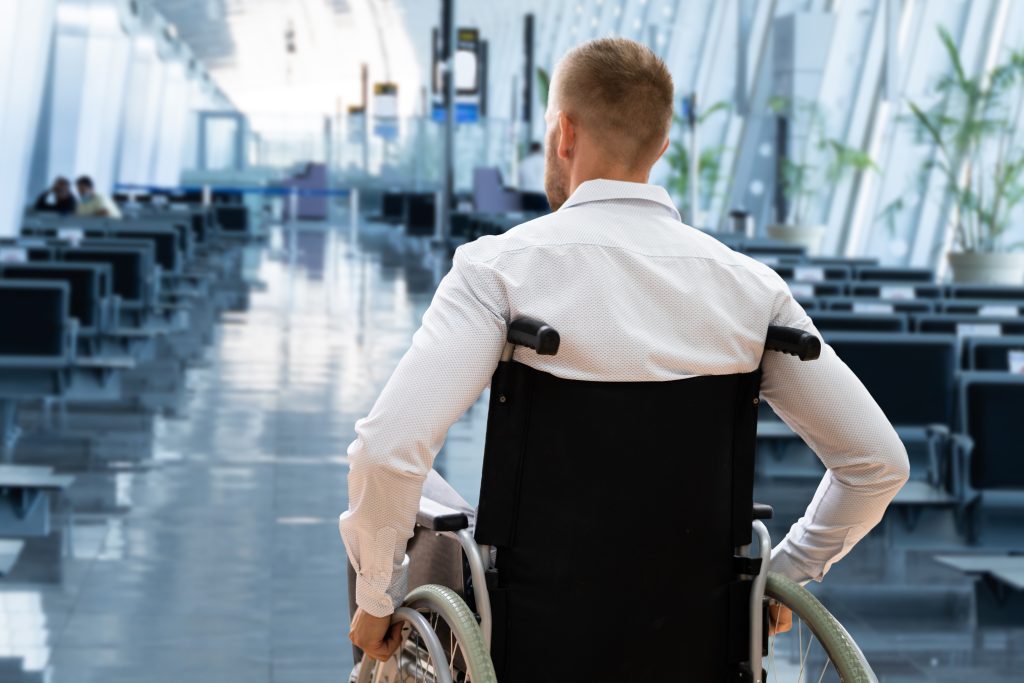
The first generation of modern accessibility focused on removing barriers in the physical world.
For much of the twentieth century, buildings, transport networks and public spaces were designed with limited consideration for people with different physical, sensory or cognitive needs. Disability was often treated as an individual limitation, even when the environment itself prevented participation.
The disability rights movement challenged that view. Disabled people and their advocates showed that many barriers were created by inaccessible environments, systems and social expectations. Accessibility became a civil rights issue, supported by growing public awareness and legislation around the world.
In the United States, the Americans with Disabilities Act became law in 1990 and set broad expectations for access to employment, transport, public services and commercial spaces. The United Kingdom introduced the Disability Discrimination Act in 1995, followed by the Equality Act 2010. European countries strengthened accessibility through equality law, public procurement requirements and shared standards, while South Korea introduced anti-discrimination legislation for disabled people in 2007.
Although legal frameworks vary by market, the core principle remains the same: organisations should not create environments that exclude people.
This shift changed the design of buildings and public infrastructure. Ramps, lifts, automatic doors, accessible parking, tactile paving and audible crossing signals became more common. Features once treated as specialist adaptations became recognised elements of responsible design.
Physical accessibility also showed that inclusive design improves experiences for many more people. Parents with pushchairs use ramps, travellers with luggage depend on lifts, older adults benefit from step-free access and delivery workers rely on automatic doors.
Accessible design creates value beyond a defined group because it makes environments easier to navigate and use.
By the early 2000s, many organisations accepted accessibility as an important consideration for property, facilities and public infrastructure. At the same time, the primary point of contact between organisations and customers was changing.
The front door was moving from a building to a screen.
Accessibility 2.0: Service Access
The growth of the internet transformed how organisations communicated with customers and delivered services.
Broadband became widely available, e-commerce expanded rapidly and smartphones put digital services in people’s pockets. Banking, shopping, travel, healthcare, education and government services moved online.
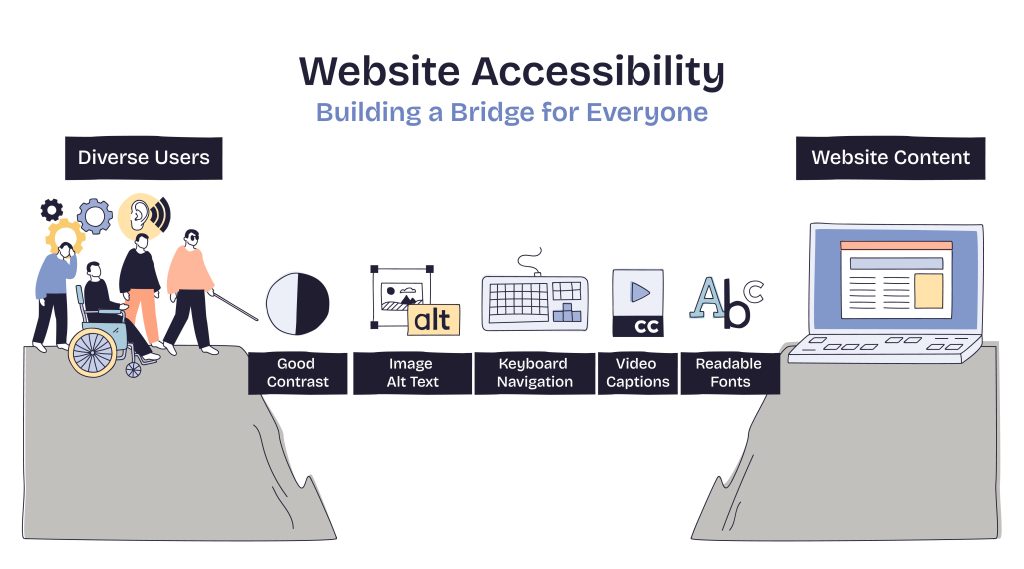
Accessibility therefore had to extend beyond the physical environment. The central question became whether people could find information, use a website, complete an online form, manage an account or buy a product without avoidable barriers.
The World Wide Web Consortium developed the Web Content Accessibility Guidelines, known as WCAG, to provide a shared framework for accessible digital content. These guidelines helped governments, businesses, designers and developers understand how keyboard navigation, screen-reader compatibility, colour contrast, captions, alternative text and predictable page structures affect access.
Digital accessibility gradually became part of user experience, software development, content design and public service delivery.
This progress became increasingly important as essential services moved online. Customers managed finances through digital banking, booked travel through apps and websites, accessed healthcare through patient portals and completed government processes through online accounts.
The COVID-19 pandemic accelerated this shift. Within months, millions of people depended on digital services for work, education, shopping, healthcare and social connection. Organisations delivered years of planned digital transformation in a fraction of the expected time.
The consequences of inaccessible design became clearer. An inaccessible website could stop someone ordering food, attending an appointment, continuing education or accessing financial support. Digital accessibility had become essential to everyday participation.
This period marked real progress, but it also led many organisations to treat websites and mobile apps as the limits of digital accessibility.
Customer journeys have since become far more complex.
A person may begin on a smartphone, continue at a kiosk, pay through a terminal and confirm their identity through a biometric system. Someone buying a train ticket may use a website, an app, a ticket machine, a station gate and an onboard information system. A hospital visit may involve online booking, digital identity checks, self-service registration and automated notifications.
Accessibility can fail at any point in that journey.
An accessible website cannot compensate for an inaccessible payment terminal. An accessible mobile app cannot help when the final step must be completed on an unusable touchscreen kiosk. A well-designed booking platform has limited value if identity verification excludes the person trying to use it.
Service access therefore needs to cover every channel through which a customer finds information, makes a decision or completes a transaction.
This is especially important for international organisations. Legal requirements and technical standards vary across the United States, the United Kingdom, the European Union and South Korea, but customers everywhere expect services to be convenient, reliable and usable.
Organisations need an approach that works across jurisdictions and technologies. It must start with the complete customer journey.
Accessibility 3.0: Independent Access
The next generation of accessibility is being shaped by autonomous customer journeys.
Organisations are redesigning services around self-service, automation, digital identity and artificial intelligence. In many sectors, customers are expected to complete entire processes without direct support from staff.
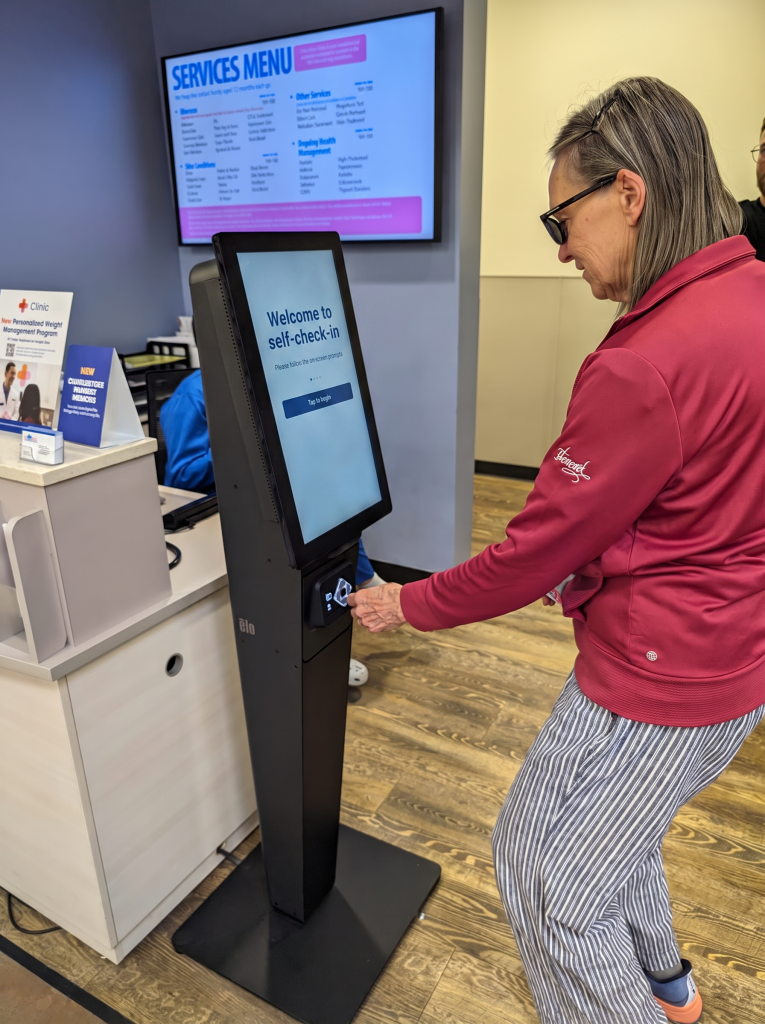
Passengers check themselves in at airports, patients register at healthcare facilities, hotel guests collect room keys from kiosks and shoppers scan and pay independently. Banks use virtual assistants for routine questions, governments are developing digital identities and retailers are testing AI-powered shopping support.
These technologies promise greater convenience for customers and significant operational benefits for organisations. They can reduce waiting times, increase capacity, lower the cost of routine transactions and free employees to focus on work that requires human judgement and empathy.
Those benefits depend on people being able to use the technology successfully.
The defining question for Accessibility 3.0 is simple:
Can every customer complete the full journey independently?
Independent access means a person can achieve the outcome they came for. They can find a product, make a payment, book an appointment, check in for a journey, verify their identity or receive support without barriers that force them to abandon the process or ask for help.
The specific technology is secondary to the outcome. A journey may involve a kiosk, smartphone, voice interface, AI assistant or a combination of physical and digital systems. The organisation remains responsible for making the complete experience work.
Artificial intelligence creates major opportunities for this new generation of accessibility. AI can generate captions, describe images, translate information, simplify complex language and personalise interfaces. Voice technology can offer alternatives for people who cannot easily use touchscreens, while adaptive systems may eventually allow interfaces to respond to individual needs and preferences.
These developments could remove barriers that previous technologies struggled to address.
They also introduce risks. AI systems are trained on data that may reflect existing bias. Voice interfaces may struggle to recognise speech impairments, regional accents or speech in noisy environments. AI-generated content and interfaces may not consistently meet accessibility standards. Automated identity checks can exclude people who cannot complete a required physical action, provide a specific form of identification or interact with a biometric system in the expected way.
Agentic AI adds further complexity. These systems are beginning to make decisions, complete purchases, submit applications and manage processes on behalf of users. As their capabilities expand, organisations will need to explain decisions, request informed consent, communicate uncertainty and recover from errors in accessible ways.
Customers must also be able to understand what an automated system has done, correct mistakes and reach human support when needed.
These questions already affect real customer journeys. They belong in strategy, procurement and design conversations today.
Accessibility cannot be added as a final review after a system has been selected and deployed. Early decisions about hardware, software, authentication, data, interface design and operational support determine whether the journey will be accessible.
Legislation is also expanding to reflect the role of digital products and services in everyday life. The European Accessibility Act has introduced wider requirements for a range of products and services in the European Union. The United States, the United Kingdom and South Korea each have their own mix of disability rights legislation, technical expectations, sector regulation and legal precedent.
Global organisations must understand the requirements in each market. They also need a consistent design principle to guide investment across regions.
Independent access provides that principle.
What This Means for Organisations
Each generation of accessibility has changed the questions organisations need to ask.
Accessibility 1.0 asked whether people could enter a building and navigate a physical environment.
Accessibility 2.0 asked whether people could access information and services through websites, applications and other digital channels.
Accessibility 3.0 asks whether every customer can complete the whole journey independently.
That question has direct implications for customer experience, operational efficiency, technology adoption and return on investment.
For leaders setting strategy, independent access reframes accessibility as a source of trust, differentiation and future readiness. For teams delivering self-service systems, it provides a practical test for procurement, design, deployment and performance measurement.
Most business cases for self-service, automation and artificial intelligence share the same goals: serve more customers, reduce routine operating costs, improve productivity, shorten waiting times and provide a more convenient experience.
Every customer who completes a journey independently supports those goals. Customers receive faster, more dignified service. Employees are available for work that genuinely requires them. The technology delivers the efficiency it was bought to create.
When customers cannot complete the journey, friction enters the operating model.
Employees must interrupt other tasks to help. Queues grow, transaction times increase and adoption falls short of forecasts. Some customers abandon the process completely, while others avoid the channel in future because they no longer trust it.
These effects are often spread across teams and systems, making the commercial impact difficult to see. A failed kiosk interaction may appear as a customer service request, an incomplete transaction, a longer queue or additional demand on frontline staff. The organisation may never connect those costs to the accessibility of the original technology. This is the hidden economics of inaccessibility, and it is why accessibility should be treated as a measure of operational performance.
Most organisations track transaction volumes, completion rates, waiting times, customer satisfaction and digital adoption. Far fewer measure how many people needed help, switched channels or abandoned the journey because the technology did not meet their needs.
That missing information can create an overly positive view of performance.
A self-service system may report a high completion rate without showing how often staff intervened. A digital service may appear to reduce costs while shifting work to customer support teams. A kiosk may process thousands of transactions while excluding customers who have quietly stopped trying to use it.
Organisations therefore need to examine the quality and independence of completion, not only transaction volume.
Independence should become a KPI: not only whether a transaction was completed, but whether the customer completed it without avoidable assistance, channel switching or abandonment.
Useful questions include:
- Can every customer complete the journey easily and independently?
- Where do people request assistance, switch channels or abandon the process?
- Have people with a wide range of lived experiences been involved throughout research, design and testing?
- Do procurement requirements cover the complete journey, including hardware, software, payments, identification and support?
- Can customers recover from mistakes and reach human help when necessary?
- Will the solution remain accessible as software, AI capabilities and regulatory requirements evolve?
- How will accessibility be monitored once the service is live?
- Can the organisation demonstrate a link between accessibility and operational performance?
Executive teams, customer experience leaders, digital transformation programmes, operations, procurement, technology, legal and risk functions should all consider these questions.
Accessibility now crosses all these areas because customer journeys do too.
Storm Interface’s Perspective
For nearly forty years, Storm Interface has helped organisations make self-service technology easier to use with confidence and independence.
During that time, self-service has expanded from cash machines and ticketing systems into retail kiosks, healthcare registration, airport passenger processing, hospitality, financial services and public-sector environments. The next phase will bring greater use of digital identity, automation, artificial intelligence and autonomous customer journeys.
The technology has changed considerably, but the core customer expectation has not: people want to complete everyday tasks easily and independently.
Accessibility should therefore influence a project from the beginning. Decisions made during strategy, procurement and design shape the experience customers ultimately receive. Fixing accessibility issues after deployment is often more expensive, disruptive and less effective because barriers may be embedded in the hardware, software or operating model.
We also believe the most effective solutions are developed with the people who will use them.
Technical standards provide an essential foundation, but they cannot reveal every barrier a customer may face in a real environment. Standards define the baseline; lived experience reveals whether the journey works in practice. Testing with people who have lived experience helps organisations understand how products perform in busy transport hubs, noisy restaurants, clinical settings, unfamiliar environments and moments when customers may be tired, anxious or under pressure.
That insight should shape the complete journey.
Storm Interface designs and manufactures assistive technology used in self-service systems around the world. Trusted by leading self-service brands, we also work with customers earlier in the process to help them understand accessibility requirements, identify potential barriers and make better decisions about the systems they procure and deploy.
Our role is guided by a simple principle: Every customer should be able to complete every journey easily, confidently and independently.
This principle applies across sectors, technologies and markets. It is relevant to a retailer in the United States, a transport provider in the United Kingdom, a financial institution operating across the European Union or a healthcare organisation in South Korea.
The next decade will bring more intelligent and autonomous services. Organisations that build accessibility into the complete customer journey will be better placed to meet changing regulation, improve customer experience and realise the operational value of their technology investments.
The next generation of accessibility will be measured by the independence it enables.
Technology creates value when people can use it successfully.
Accessible technology creates value by ensuring everyone has that opportunity. The organisations that succeed over the next decade won’t simply deploy more technology, they will ensure more people can use it successfully. For almost forty years, Storm Interface has helped organisations achieve exactly that by designing self-service technology that works for more people, across more environments and throughout increasingly complex customer journeys. As accessibility continues to evolve, our focus remains the same: helping organisations remove barriers, improve operational performance and create customer experiences that work for everyone.
Want to know how accessible your customer journeys really are? Share your self-service experience or get in touch to arrange an accessibility review with one of our accessibility experts.
References
- ADA.gov. Americans with Disabilities Act of 1990, as amended. https://www.ada.gov/law-and-regs/ada/
- Legislation.gov.uk. Disability Discrimination Act 1995. https://www.legislation.gov.uk/ukpga/1995/50/contents
- Legislation.gov.uk. Equality Act 2010. https://www.legislation.gov.uk/ukpga/2010/15/contents
- EUR-Lex. Directive (EU) 2019/882 on the accessibility requirements for products and services. https://eur-lex.europa.eu/eli/dir/2019/882/oj/eng
- European Commission. European Accessibility Act. https://commission.europa.eu/strategy-and-policy/policies/justice-and-fundamental-rights/disability/european-accessibility-act-eaa_en
- World Wide Web Consortium. Web Content Accessibility Guidelines (WCAG) 2.2. https://www.w3.org/TR/WCAG22/
- Korea Legislation Research Institute. Act on the Prohibition of Discrimination against Persons with Disabilities and Remedy against Infringement of Their Rights. https://elaw.klri.re.kr/eng_mobile/viewer.do?hseq=55535&type=part&key=38
- International Organization for Standardization. ISO 9241-210:2019, Ergonomics of human-system interaction — Human-centred design for interactive systems.
- https://www.storm-interface.com/article/the-americans-with-disabilities-act-ada-explained-what-accessibility-means-for-modern-organisations-digital-services-and-self-service-technology/
- https://www.storm-interface.com/article/the-americans-with-disabilities-act-ada-explained-what-accessibility-means-for-modern-organisations-digital-services-and-self-service-technology/