
How do I reduce long-term risk when specifying accessibility hardware? It’s a question every organisation investing in self-service should ask.
Because the answer influences the reliability of the hardware, customer experience, operational performance and the long-term value of the investment.
The same principle applies whether you’re specifying a new deployment or retrofitting an existing estate.
“Designing an accessible interface is only the beginning. The real challenge starts after installation,” says Matthijs Verhagen, our resident accessibility expert.
Customers rely on accessible interfaces every day to buy tickets, check in, make payments and access essential services independently. Those journeys take place in busy transport hubs, hospitals, retail environments and other demanding locations where technology is exposed to continuous vibration, repeated impacts, changing temperatures and thousands of customer interactions.
A transport ticket machine experiences very different conditions from a laboratory bench.
“If tactile controls become inconsistent, buttons lose precision or mechanical components begin to wear, customer independence is affected long before the product reaches the end of its expected life. Organisations also begin to incur hidden costs through increased maintenance, reduced customer confidence and greater demand for staff assistance. That is why durability is really an accessibility issue.” Matthijs reflects.
Accessibility should perform as reliably in year five as it did on the day the system was commissioned. Every customer should be able to complete every journey independently, regardless of whether the accessibility solution was designed into a new product or introduced through a retrofit.
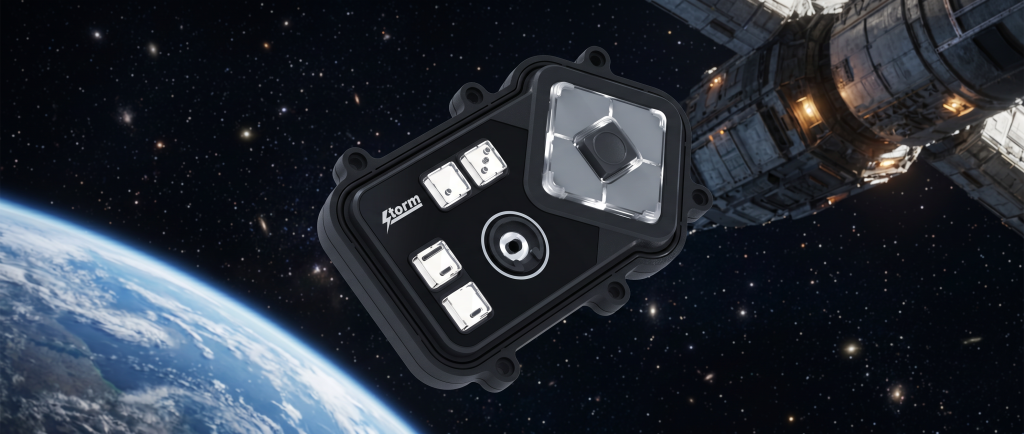
This philosophy sits behind the development of AudioNav.
Available in both six-key and nine-key configurations, AudioNav has completed rigorous shock and vibration testing against internationally recognised standards, including IEC 60068 and MIL-STD-810. These standards reflect the environments the product was designed for, including rail, automotive and other high-use installations where continuous vibration and mechanical shock are part of normal operation.
Following completion of the formal qualification programme, we wanted to understand how much further the product could go.
Additional exploratory testing subjected AudioNav to 250 high-intensity shock cycles under maximum test conditions. The independent test laboratory noted that these parameters exceeded those commonly applied within some aerospace qualification programmes.
The objective was to understand the limits of the product and provide organisations with confidence that accessible customer journeys will continue to perform in demanding environments throughout the operational life of the installation.
For people who rely on tactile interfaces, consistency matters.
✅ Every button press should feel familiar.
✅ Every control should respond predictably.
✅ Every interaction should reinforce confidence that the technology will work as expected.
Our testing confirmed that AudioNav maintains:
- consistent tactile response under vibration
- mechanical alignment over time
- reliable switch actuation following repeated shock loading
- confident, independent interaction in demanding environments.
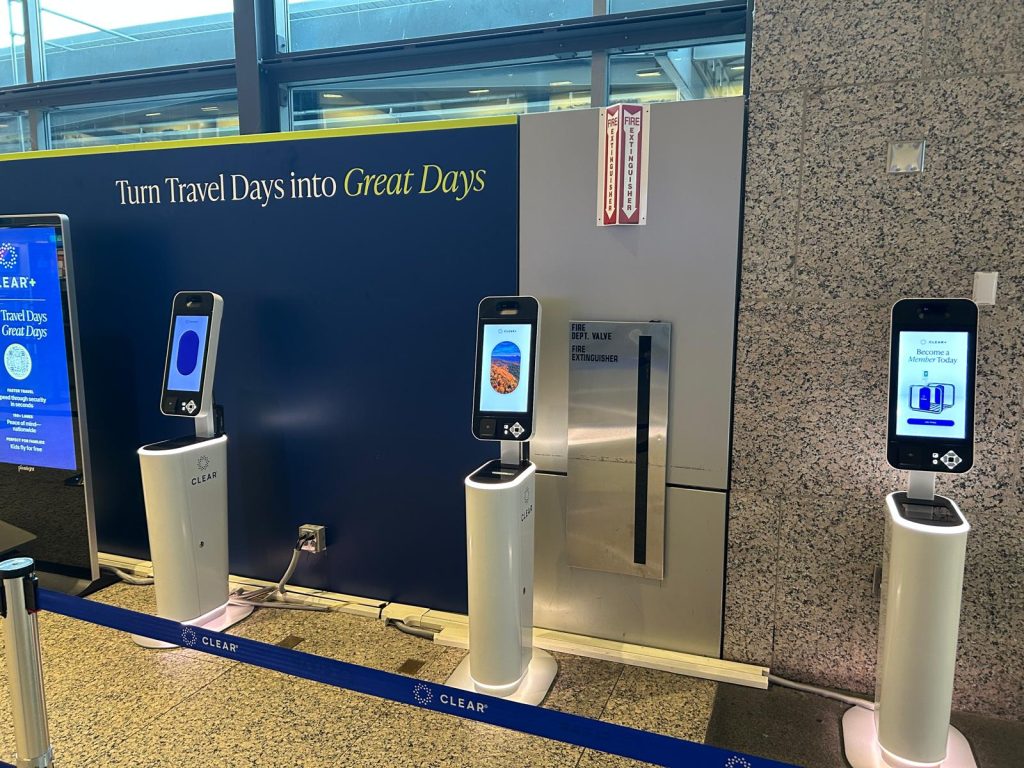
These characteristics rarely appear on a specification sheet, yet they have a direct impact on customer experience, operational performance and long-term return on investment.
At Storm Interface, we believe accessibility is operational performance.
That principle applies just as much to engineering as it does to interface design. Accessible technology should continue supporting independent customer journeys throughout years of daily use, whether organisations are designing new self-service solutions or retrofitting existing ones. Long-term reliability should be part of the accessibility conversation from the very beginning.
That is what we mean by designing for real-world impact: engineering accessibility solutions that perform where people need them most and testing them to prove they are ready.
If you’re planning a new self-service deployment or looking to retrofit accessibility into an existing estate, we’d be happy to discuss how to build long-term reliability into your accessibility strategy.
We’re also interested in how accessible self-service performs beyond the test environment.
Perhaps you’ve used it at a railway station, in a hospital, at a retail checkout or somewhere else entirely. We’d love to know where you found it and what your experience was like.
We’re inviting people to share their self-service experiences, whether they enabled independent journeys or created unnecessary barriers. Every real-world insight helps organisations understand what’s working, where friction still exists and how accessible customer experiences can continue to improve. Share your self-service experience here.