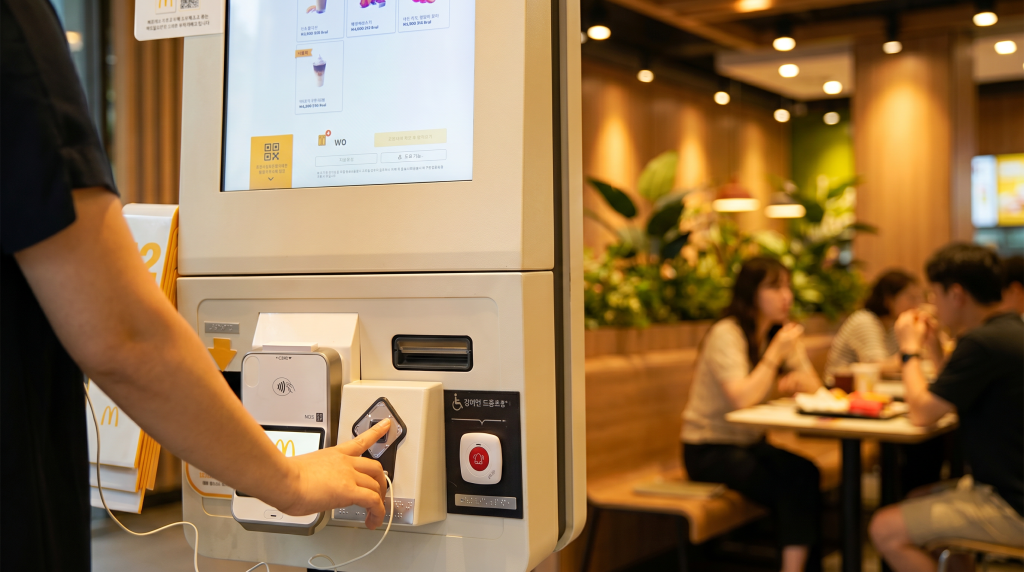

Most senior leaders we speak to can tell us the ROI of their digital transformation programme, very few can tell us how many customers can use it.
Every year, organisations invest billions in digital transformation. They deploy self-service kiosks, automate customer journeys, introduce AI-powered experiences and redesign services around the assumption that customers increasingly want to help themselves.
The business case is clear and compelling:
- Lower operating costs.
- Greater efficiency.
- Better customer experiences.
- Higher returns on technology investment.
Boards scrutinise implementation costs, adoption rates and return on investment. They measure utilisation, productivity and customer satisfaction.
Yet very few ask one deceptively simple question.
Can every customer actually use what we’ve built?
Because if the answer is no, the technology will never deliver its full commercial potential.
That is why accessibility has quietly become one of the most important strategic issues facing organisations today. Not because legislation has changed, but because the way organisations serve customers has fundamentally changed.
Accessibility is no longer about helping people access a building. Increasingly, it determines whether they can access the business itself.
For organisations investing heavily in self-service, automation and AI, accessibility is no longer a compliance exercise. It is a commercial performance issue.
Every Inaccessible Interaction Has a Cost
Most organisations still view accessibility through the lens of compliance. That’s understandable. Regulations matter, and every organisation has a responsibility to ensure its products and services are accessible.
But compliance is simply the minimum standard. Commercial performance is the real objective.
Every business understands friction.
- If a website is slow, customers abandon it.
- If an online checkout is confusing, conversion rates fall.
- If a payment system fails, revenue is lost.
Self-service is no different.
Every time a customer cannot complete a transaction independently, friction enters the system.
- Staff are forced to intervene.
- Queues become longer.
- Transaction times increase.
- Customer confidence declines.
- Digital adoption falls.
- The return on technology investment begins to erode.
The technology may be functioning exactly as it was designed, but commercially it has failed because it has introduced friction into a journey that was supposed to remove it.
Every time someone must help a customer use self-service, the business has paid twice: Once for the technology and once for the person replacing it.
That’s why many ambitious organisations are now viewing accessibility in the same way as every other source of customer friction – as a commercial lever that influences customer experience, operational efficiency and return on investment.
The organisations leading this shift are no longer asking, “Are we compliant?”
They’re asking a much better question.
How many of our customers can complete their journey independently?
Because independence is where commercial value is created.
- Customers enjoy a faster, simpler experience and organisations reduce operating costs.
- Staff are free to focus on higher-value interactions instead of replacing technology that customers should have been able to use in the first place.
- Accessibility doesn’t compete with commercial objectives, it enables them.

The World’s Largest Underserved Customer Market
Businesses spend enormous amounts of time, energy and money understanding their customers. They analyse buying behaviour, optimise conversion funnels, map customer journeys and remove every possible point of friction.
Yet one of the world’s largest customer groups is still routinely overlooked.
Around 1.3 billion people worldwide live with a disability – approximately one in six of the global population. Together with their families and households, they represent more than $13 trillion in annual spending power.
In the UK alone, the Purple Pound is worth an estimated £474 billion every year. If it were a national economy, it would rank among the 30 largest in the world – larger than the GDP of many developed nations. Few organisations would knowingly ignore a market of that scale.
Yet many unintentionally make it difficult for those customers to engage with them.
When someone struggles to use a website, complete a payment, check in for an appointment or order through a self-service kiosk, they rarely conclude that the organisation has an accessibility problem.
They conclude that it’s difficult to do business with.
Some ask for assistance. Others abandon the transaction. Many simply don’t return and the commercial impact extends far beyond a single lost sale.
Poor accessibility increases support costs, reduces digital adoption, weakens customer loyalty and limits the return organisations achieve from the technology they’ve invested in.
Perhaps the biggest misconception is that accessibility only benefits disabled customers. It doesn’t.
- Automatic doors help travellers with luggage, parents with pushchairs and delivery drivers carrying equipment.
- Captions are used by commuters watching videos without sound.
- Simple, intuitive interfaces reduce errors for everyone.
- The best accessible design is often simply the best design.
That’s because accessibility and customer experience share the same objective: Removing unnecessary friction.
The organisations recognising this aren’t investing in accessibility because they see it as social responsibility alone, they’re investing because products that are easier to understand, easier to navigate and easier to use consistently outperform products that aren’t.
That’s not just good design; it’s good business.
Why Self-Service Changes Everything
No technology has done more to change the accessibility conversation than self-service.
Over the last two decades, organisations across retail, banking, healthcare, transport and hospitality have fundamentally redesigned how customers interact with them. Ordering food, checking into hospitals, buying train tickets, paying for shopping and checking in for flights increasingly happen without speaking to another person.
The commercial rationale is obvious.
Self-service enables organisations to serve more customers, reduce queues, improve operational efficiency and make better use of frontline teams. Customers benefit from faster, more convenient experiences. Businesses benefit from lower operating costs and greater scalability.
Everyone wins. At least, that’s the theory.
Every self-service journey ends in one of four ways.
- Independent. The customer completes the transaction confidently without assistance.
- Assisted. A member of staff must intervene to help complete the transaction.
- Abandoned. The customer gives up before completing the journey.
- Avoided. The customer loses confidence in self-service altogether and chooses not to use it again.
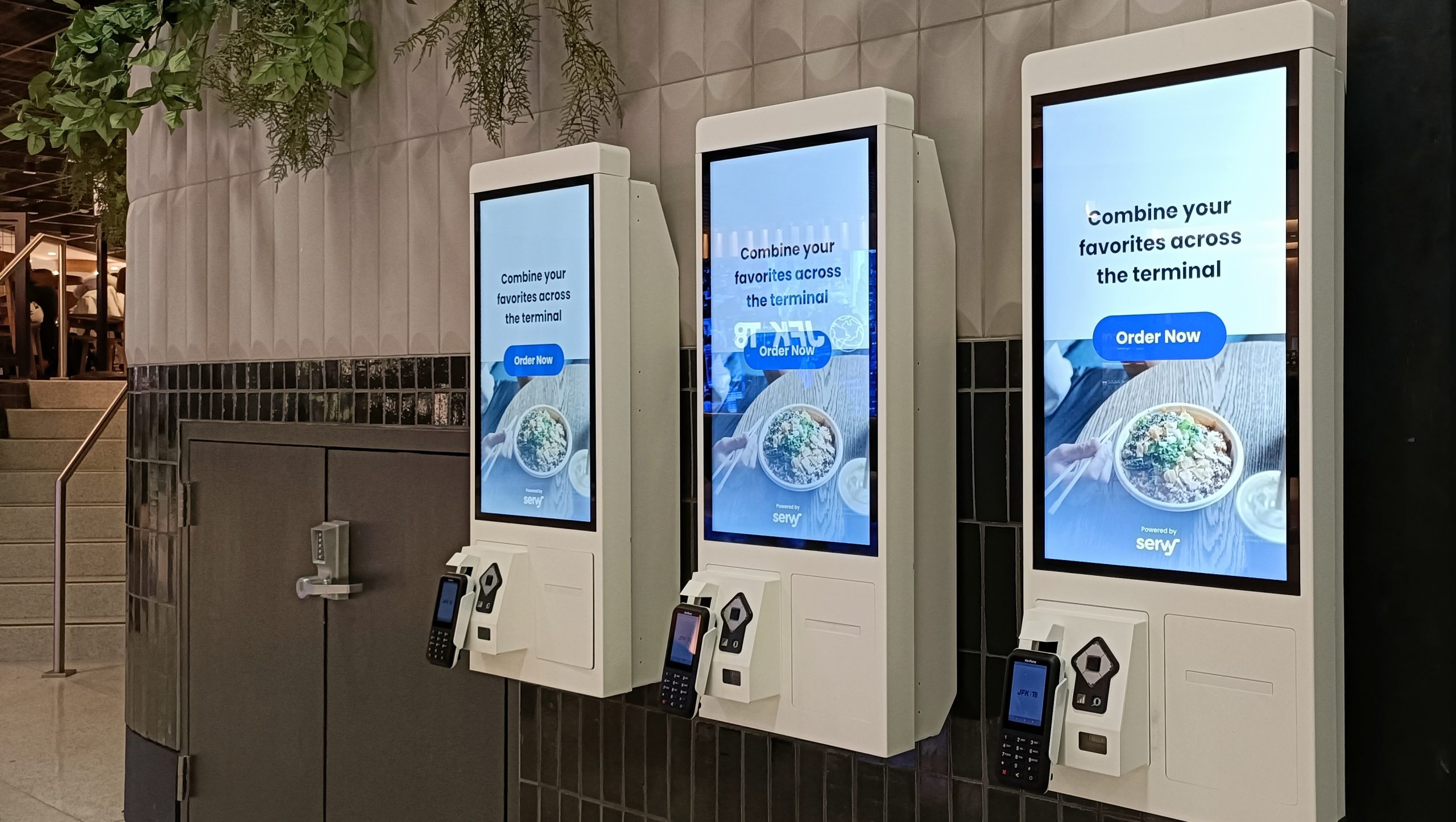
Only one of those outcomes delivers the return on investment organisations expected when they approved the project: independence
The real measure of success is how many customers can complete their journey independently.
Because every independent transaction creates value twice:
- For the customer, it provides convenience, confidence and dignity.
- For the organisation, it reduces operating costs, increases throughput and allows colleagues to focus on higher-value interactions rather than helping customers overcome barriers that technology should never have created.
Accessibility is about ensuring technology fulfils the purpose it was purchased to deliver.
That’s why accessibility should be designed into every self-service project from the very beginning, not treated as a final compliance check once hardware has been installed and software has been deployed.
The organisations seeing the greatest return from self-service understand a simple truth: Technology only creates value when people can use it.
The Hidden Economics of Inaccessibility
When organisations discuss accessibility in the boardroom, the conversation often begins with legal risk. That’s understandable. Digital accessibility legislation is evolving around the world, and organisations rightly want to minimise compliance risk.
But legal action is rarely the first cost of poor accessibility, it’s usually the last.
The first costs are commercial.
They appear quietly, often without anyone recognising the cause.
- Customer adoption is lower than forecast.
- Queues remain longer than expected.
- Staff continue helping customers complete routine tasks.
- Support costs increase.
- Customer satisfaction falls.
- The projected return on investment takes longer to materialise.
Each issue may seem relatively small in isolation but together, they quietly erode the value of the entire investment.
The irony is that organisations often conclude the technology isn’t working.
Customers aren’t rejecting self-service, they’re rejecting friction.
- Every assisted transaction represents labour the organisation believed technology would remove.
- Every abandoned transaction represents lost revenue.
- Every avoided transaction reduces future adoption and increases pressure on frontline teams.
Accessibility should therefore be viewed in the same way as cybersecurity, reliability or performance, it protects the value of technology investment.
Perhaps the most expensive mistake organisations make is waiting until deployment before thinking seriously about accessibility.
Retrofitting accessibility almost always costs more than designing for it from the outset.
- Interfaces need redesigning.
- Customer journeys require rebuilding.
- Hardware often needs replacing.
- Training must be repeated.
All while live services continue operating.
By contrast, designing for accessibility from the beginning produces technology that is simpler, more intuitive and more effective for everyone.
That’s why accessibility doesn’t slow innovation, it protects the return on innovation.
AI Doesn’t Change the Question
Artificial intelligence is transforming almost every aspect of customer experience.
AI assistants are answering questions, recommending products, automating support and increasingly becoming the interface through which customers interact with organisations.
Many assume this will solve accessibility challenges.
It won’t.
- An inaccessible AI interface is still inaccessible.
- An inaccessible voice assistant still excludes people.
- An inaccessible self-service kiosk simply becomes a more intelligent inaccessible kiosk.
The technology changes but the commercial question doesn’t:
Can every customer complete their journey independently?
If they can’t, organisations haven’t removed friction, they’ve simply introduced a more sophisticated version of it.
This is why accessibility is becoming increasingly important as AI becomes more capable.
AI will dramatically increase the number of customer interactions that happen without employees.
That makes accessibility more important than ever because there will be fewer opportunities for people to step in when technology fails.
Self-service is no longer one option among many, increasingly, it is the customer journey and that raises the standard organisations should expect from every digital experience they create.
Technology should not simply function, it should be usable, intuitive and inclusive – capable of serving the widest possible range of customers without assistance.
From Compliance to Competitive Advantage
For decades, accessibility has largely been viewed as a specialist discipline.
- Something to review once a product had been designed.
- Something to test before launch.
- Something to satisfy regulators.
That mindset belongs to a different era.
Today in some of the largest and most ambitious companies, accessibility shapes customer experience, improves operational efficiency and determines whether organisations realise the full value of their investment in digital transformation.
Boards already expect technology to be secure, reliable and scalable.
Accessibility answers one of the most fundamental questions any organisation can ask.
Can our customers actually use what we’ve built?
If the answer is no, every other measure of success becomes harder to achieve.
If the answer is yes, accessibility becomes far more than a compliance exercise.
It becomes:
- A driver of adoption.
- A driver of efficiency.
- A driver of customer loyalty.
- A driver of return on investment.
- A competitive advantage.
The organisations that recognise this today are building a lasting advantage for tomorrow.
Not because they necessarily have better accessibility policies, but because they’ll build products and services that more people can use, more often, with less effort.
History shows that the organisations creating the greatest value are rarely those with the most advanced technology. They are the organisations that remove the most friction:
- The internet removed the friction of distance.
- Smartphones removed the friction of location.
- Cloud computing removed the friction of scale.
- Artificial intelligence promises to remove the friction of knowledge.
The next competitive advantage will come from removing the friction that still prevents millions of people from using the technology organisations are investing so heavily to build. Accessibility is how we achieve that.
Looking Beyond the Technology
For nearly four decades, Storm Interface has helped organisations make self-service technology work for more people.
During that time, we’ve seen self-service evolve from a niche convenience into one of the primary ways organisations deliver services. We’ve watched airports transform the passenger journey, retailers redefine checkout, hospitals digitise patient registration, restaurants reinvent ordering and banks reshape everyday transactions.
Every generation of technology has promised to make life simpler. Sometimes it has and sometimes it has simply shifted complexity somewhere else.
One lesson has remained remarkably consistent:
Successful self-service isn’t determined by the sophistication of the technology. It’s determined by whether people can use it confidently, independently and without friction.
That’s why we’ve always believed accessibility should never be treated as a feature to add at the end of a project. It should be designed into the customer journey from the very beginning. The decisions made before a solution is specified have far greater impact than the changes made after it’s deployed.
The conversations we have with clients today reflect that shift.
They’re no longer asking how to make a kiosk compliant.
They’re asking:
- How do we increase adoption?
- How do we reduce customer friction?
- How do we improve return on investment?
- How do we enable more customers to complete their journey independently?
Those aren’t accessibility questions.
They’re business questions.
Which is why we believe it’s time to stop asking whether technology is accessible and start asking a better question:
Does it enable independence?
Because that’s what customers want.
Nobody wants to ask for help to complete a routine transaction.
Nobody wants to be excluded from a service everyone else can use.
And organisations don’t invest in self-service because they want more kiosks, more screens or more automation. They invest because they want better customer experiences, greater efficiency and stronger commercial performance.
Accessibility is what connects those two ambitions.
It enables people to act independently while enabling organisations to realise the full value of their investment in technology.
As self-service continues to expand and AI reshapes how services are delivered, that will only become more important.
At Storm Interface, we’ve never seen ourselves as simply a hardware manufacturer. We’re a strategic accessibility partner, helping organisations design self-service experiences that are intuitive, inclusive and commercially successful from the outset.
That’s why organisations around the world – from global brands such as McDonald’s and LG Electronics to major transport hubs including Schiphol Airport and JFK International Airport – trust Storm Interface to support their accessibility strategy.
The organisations that lead over the next decade won’t necessarily be those deploying the most technology.
They’ll be the organisations deploying technology that the most people can use.
Because accessibility isn’t ultimately about compliance, it is about helping every customer feel welcome, every time, everywhere.