
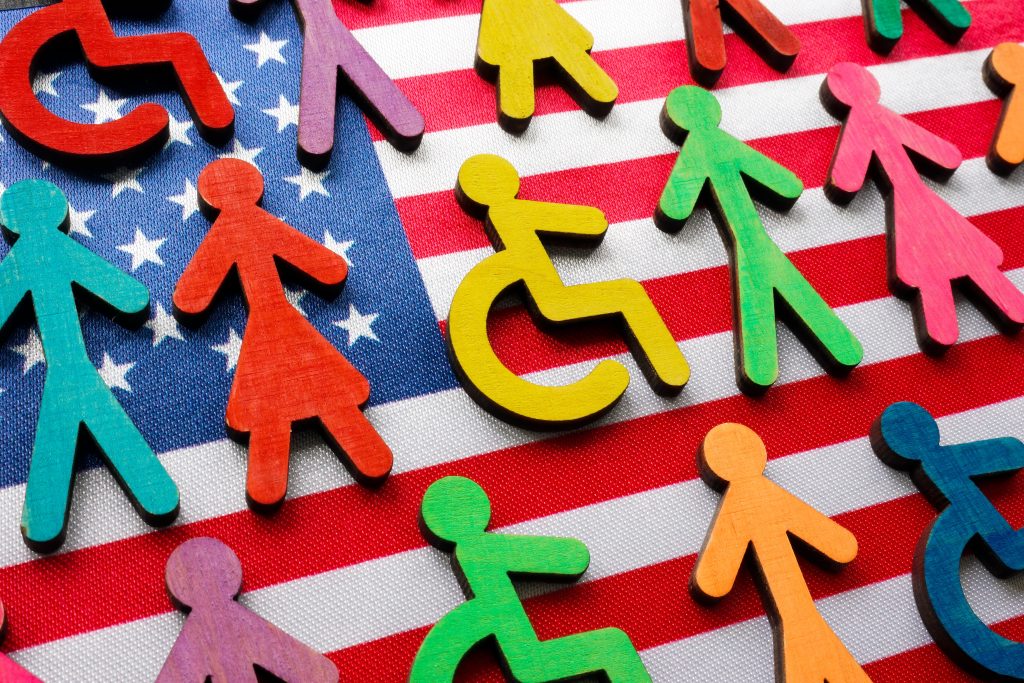
What does the Americans with Disabilities Act mean in a world increasingly defined by digital services, self-service technology and automated customer journeys?
The Americans with Disabilities Act (ADA) is often described as a disability law and, whilst that description is technically correct, it dramatically understates its significance.
The ADA is one of the most important civil rights laws ever enacted. Signed into law on 26 July 1990 by President George H. W. Bush, it established a simple but transformative principle: people with disabilities should have the same opportunity to participate in society as everyone else.
The legislation prohibited discrimination across employment, public services, transportation, telecommunications and businesses open to the public. It created legal protections for millions of Americans and became the world’s first comprehensive civil rights law focused on disability rights.
Yet more than thirty-five years later, the ADA is still widely misunderstood. It is now a legal and business-critical framework for accessible digital, self-service and public-facing technology.
For organisations in retail, hospitality, healthcare, banking, transport, and public services, the ADA is a customer experience, technology, and business imperative.
Yet many organisations still associate accessibility with wheelchair ramps, accessible parking spaces, and building regulations. Others view it primarily as a compliance requirement sitting somewhere between legal risk management and corporate responsibility.
The ADA was never intended to be any of those things alone. It was created to ensure independence, dignity, freedom of choice, and equal access to opportunity.
More than three decades later, those principles remain unchanged. What has changed is where barriers exist. Increasingly, they are digital rather than physical.
The questions organisations now face are whether:
- a building is accessible.
- a customer can independently order food from a kiosk.
- a patient can access healthcare through a digital portal.
- a traveller can purchase a ticket from a self-service machine.
- a banking customer can complete a transaction without assistance.
- a person can navigate an increasingly automated customer journey with the same confidence, independence and dignity as everyone else.
The ADA established a principle that remains just as relevant in 2026 as it was in 1990: People should not be excluded because systems were designed without them in mind.
As customer journeys become increasingly digital, accessibility is a
- facilities issue
- compliance issue.
- customer experience issue.
- procurement issue.
- product design issue.
- technology issue.
- brand issue.
An accessibility failure today is just as likely to occur inside a website, mobile application or self-service kiosk as it is at the entrance to a building. This shift is precisely why accessibility can no longer be viewed as a specialist concern sitting at the edge of a project.
As organisations replace human interactions with self-service technologies, accessibility must be designed directly into the experience itself.
This guide explores the history, purpose, and evolution of the ADA. It examines what compliance means in a digital-first world and how organisations can move beyond minimum legal requirements to create genuinely inclusive experiences.
To understand why accessibility has become a key technology issue, it helps to start on a summer day in Washington, D.C.
“Let the shameful wall of exclusion finally come tumbling down.”
Accessibility requirements did not emerge from procurement frameworks or technical standards. They emerged from a civil rights movement determined to remove barriers preventing millions of people from participating fully in society.
On July 26, 1990, President George H. W. Bush signed the Americans with Disabilities Act into law on the South Lawn of the White House.
Surrounded by disability advocates including Justin Dart Jr., Evan Kemp, Rev. Harold Wilke, and many others who had spent years fighting for equal rights, Bush marked a moment that would reshape American society.
“Let the shameful wall of exclusion finally come tumbling down.”
The words resonated because they captured the purpose of the legislation: The ADA was never simply about improving access to buildings. It was about removing barriers that excluded people with disabilities from education, employment, transportation, public services, and everyday life.
Bush described the legislation as bringing Americans closer to a day when no one would be deprived of “life, liberty, and the pursuit of happiness.” He spoke of ensuring independence, freedom of choice, control over one’s life, and the opportunity to participate fully in society.
LINK TO VIDEO: https://www.youtube.com/watch?v=-cNcE48Xjw8
He also made a point that feels remarkably relevant today:
“Together, we must remove the physical barriers we have created, and the social barriers that we’ve accepted.”
Those words encapsulate the ADA’s purpose and enduring legacy as it became the world’s first comprehensive civil rights law protecting people with disabilities.
At the time, many barriers were visible: buildings without ramps, inaccessible transport systems, employers unwilling to hire qualified candidates, and schools unwilling to educate disabled children.
Thirty-five years later, many of those same interactions take place through kiosks, payment terminals, ticketing machines, mobile applications, and digital self-service journeys. The barriers have changed form, but the challenge remains the same.
The ADA was never fundamentally about buildings. It was about participation.
Physical accessibility was one means of achieving that goal but not the goal itself.
The goal is still equal participation. The task is still removing barriers. Only the barriers themselves have evolved.
Many organisations still approach accessibility through a physical infrastructure lens. The reality is that modern customer journeys increasingly take place through technology.
The organisations creating the greatest accessibility risks today are not necessarily those with inaccessible buildings. They are often those with inaccessible digital experiences.
Why the ADA matters more than ever
As organisations increasingly rely on self-service technology, digital platforms, mobile applications, and automated customer journeys, accessibility can no longer be confined to physical spaces.
The barriers of the twenty-first century are increasingly digital. Accessibility must therefore be designed into technology with the same rigour applied to buildings and physical environments.
Bush argued that society must remove not only physical barriers but also “the social barriers that we’ve accepted.” Today, inaccessible digital experiences can become those barriers.
A kiosk that cannot be used independently by someone with a visual, hearing, mobility, or cognitive impairment may effectively deny access to a service available to everyone else.
The ADA’s objective remains straightforward: independence, freedom of choice, control over one’s life, and full participation in society.
Those same principles should guide the design and procurement of self-service technologies today.
The connection to modern accessibility regulation is clear. The European Accessibility Act applies many of these same principles to digital products, services, and self-service technologies, making accessibility a legal requirement across a growing range of customer experiences.
For procurement and technology leaders, accessibility is not simply about avoiding compliance failures. It is about ensuring that technology delivers the independence and inclusion that disability legislation was designed to protect.
As Bush concluded during the signing ceremony, the ADA was intended to bring down “the shameful wall of exclusion.”
For organisations deploying self-service technology today, the challenge is ensuring that new digital barriers do not replace the physical barriers previous generations worked so hard to remove.
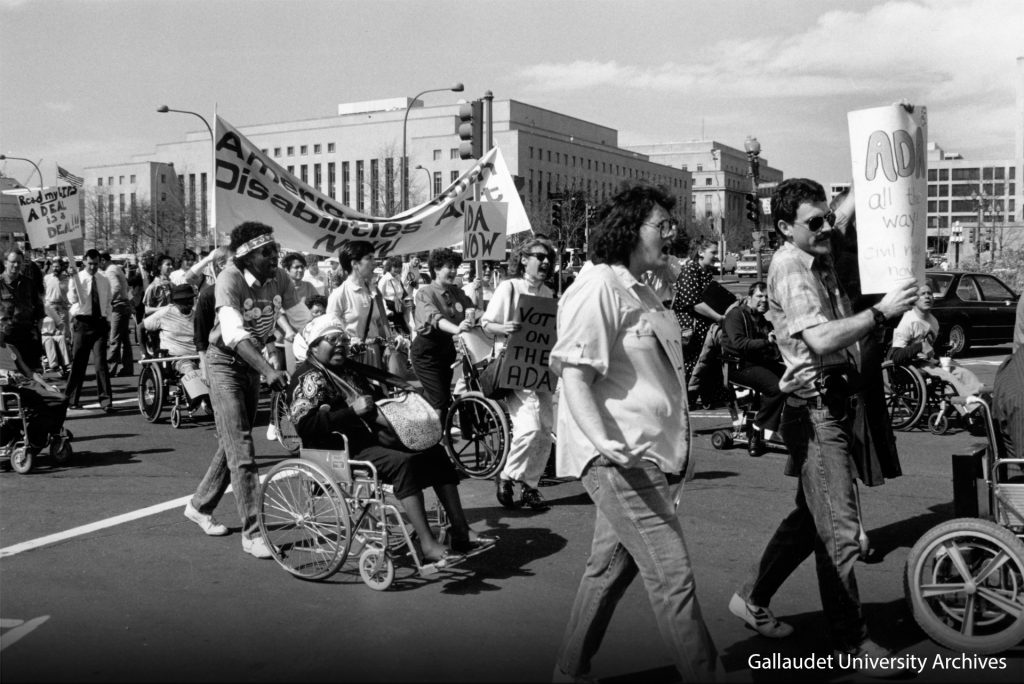
The Road to the ADA
The ADA did not emerge overnight. It was the result of decades of advocacy by disabled Americans who challenged exclusion from education, employment, transportation and public life.
Before the ADA, discrimination against people with disabilities was not only common but often accepted as normal.
Schools refused admission to disabled children. Employers routinely rejected qualified candidates because of their disabilities. Public buildings, transport systems and services were frequently inaccessible. Millions of Americans were effectively excluded from full participation in society.
One of the most influential figures in the disability rights movement, Judy Heumann, experienced this discrimination firsthand.
As a child, she was denied the right to attend school because administrators did not know how to accommodate a student who used a wheelchair. Later, despite passing her examinations, she was denied a teaching licence because officials believed she could not safely evacuate students during a fire.
Rather than accept exclusion, Heumann challenged these decisions through activism and legal action. Her efforts became part of a broader movement that transformed disability rights in America.
Before Rights Came Recognition
The ADA was the world’s first comprehensive civil rights law for people with disabilities, but to understand the ADA properly, it is necessary to understand the world that existed before it.
Millions of Americans experienced exclusion from:
- Education
- Employment
- Housing
- Transportation
- Civic participation
- Public life
Disabled individuals were often segregated, institutionalised or denied opportunities entirely. Judy Heumann’s experience exemplifies this reality: Reflecting on her experience, Heumann recalled:
“I was denied the right to go to school because the staff did not know how to accommodate a student who could not walk.”
Her experience was not unusual – the absence of legal protections meant exclusion was often accepted as normal.
She would later become one of the most influential disability rights activists in history. Focusing on the fact that the problem was never disability itself; it was inaccessible systems:
- Schools were designed without disabled students in mind.
- Employment policies were created without disabled workers in mind
- Public infrastructure was developed without disabled citizens in mind.
This distinction remains critical today as many accessibility challenges are still framed as problems individuals must overcome, whereas in reality, accessibility failures are often design failures – they occur when products, services and environments are created without considering the full range of human needs.
This principle sits at the heart of modern accessible design: Rather than expecting users to adapt to technology, technology should adapt to users and that philosophy continues to shape how accessible self-service experiences are designed today.
The 504 Sit-In: The protest that changed how society thinks about disability.
A crucial turning point came with Section 504 of the Rehabilitation Act of 1973, which stated that no qualified individual with a disability could be excluded from participation in, denied the benefits of, or subjected to discrimination under any programme receiving federal financial assistance. Today that language feels familiar. At the time, it was revolutionary.
For the first time in American history, disability discrimination was being treated as a civil rights issue rather than a medical issue. The implication was profound. The problem was no longer assumed to be the individual. The problem could be the systems, environments and institutions that excluded them.
Yet there was a problem. Section 504 existed on paper but remained largely unenforced. Years passed without meaningful regulations. For many disabled Americans, the promise of equal rights felt increasingly hollow.
By 1977, frustration had reached a breaking point. More than one hundred disability rights activists occupied a federal building in San Francisco to demand implementation of the law. What became known as the 504 Sit-In lasted nearly a month, making it one of the longest non-violent occupations of a federal building in United States history.
The protest succeeded. Federal regulations were finally signed into effect, transforming Section 504 from an aspiration into an enforceable reality and laying the foundation for what would eventually become the Americans with Disabilities Act.
Yet the movement’s greatest legacy was not regulatory; it was philosophical.
Historian and sociologist Richard Scotch later captured the shift in a single sentence:
“Instead of trying to fix the person, we’re trying to fix the environment to make it more inclusive.”
That idea fundamentally changed the disability conversation. For generations, disability had largely been viewed through a medical lens. If someone could not participate fully in society, the assumption was that the limitation existed within the individual.
The disability rights movement challenged that assumption.
- A wheelchair user is not excluded because they use a wheelchair; they are excluded because a building has stairs.
- A blind person is not excluded because they are blind; they are excluded because information has been presented in only one format.
- A customer is not excluded because they have a disability; they are excluded because a product, service or experience was designed without them in mind.
This distinction remains the philosophical foundation of modern accessibility.
The most important lesson of the 504 Sit-In is a very practical one: Accessibility progress has never happened automatically. It has always required intentional leadership, deliberate design and sustained commitment.
Many organisations still approach accessibility reactively:
- Problems are identified after deployment.
- Barriers are addressed after complaints.
- Accessibility becomes a remediation exercise.
The lesson of Section 504 is that accessibility works best when inclusion is designed into systems from the beginning. That principle is just as relevant in 2026 as it was in 1977.
Whether designing a website, deploying an AI assistant, launching a mobile application or installing a self-service kiosk, accessibility is significantly easier to build in at the specification stage than it is to retrofit later. Accessibility is most effective when adopted as a primary design principle rather than an afterthought.
From Protest Movement to Federal Law
The success of the 504 Sit-In proved that disability rights advocates could force government action. Turning that momentum into comprehensive civil rights legislation would take another decade.
A major breakthrough came in 1986 when the National Council on Disability (NCD), an independent federal agency, published a landmark report titled Towards Independence. The report examined the barriers that continued to prevent people with disabilities from participating fully in American society and concluded that existing legal protections were inadequate.
Its most significant recommendation was bold and straightforward: Congress should enact comprehensive civil rights legislation protecting people with disabilities.
The Council did not stop at a recommendation. It drafted the first version of what would eventually become the Americans with Disabilities Act.
Less widely known is that some of the earliest legislative foundations for the ADA had already emerged at the state level. In 1985, the Virginia General Assembly passed the Virginians with Disabilities Act, supported by delegate Warren G. Stambaugh. The legislation is often viewed as an important precursor to the federal ADA and demonstrated that broader disability rights protections could be translated into law.
The road to the ADA continued throughout the 1980s. In 1986, the National Council on Disability recommended the creation of a comprehensive Americans with Disabilities Act and produced an early draft of the legislation. The first version was introduced in Congress in 1988.
Support for the bill came from an unusually broad bipartisan coalition of activists, policymakers and legislators working to transform disability rights into federal law. It also faced significant opposition. Some business groups argued that compliance requirements would impose excessive costs, while some conservative religious organisations objected to extending protections to individuals living with HIV.
Among the most influential advocates were Justin Dart Jr. and Patrisha Wright. Dart travelled extensively across the United States gathering testimony from disabled Americans and documenting the barriers they faced in everyday life. Wright became one of the most effective legislative strategists in Washington and earned the nickname “The General” for her relentless coordination of the lobbying campaign that ultimately secured passage of the ADA.
The campaign attracted support from both Republicans and Democrats. Among its strongest champions was Senator Bob Dole, who lived with disabilities resulting from injuries sustained during the Second World War. Senators Ted Kennedy and Tom Harkin became leading congressional sponsors of the legislation.
Kennedy described the proposed law as: “An emancipation proclamation for the disabled.”
Supporters argued that the legislation would do for disability rights what earlier civil rights laws had done for racial and gender equality: establish equal participation as a legal right rather than a matter of discretion.
The bill also faced significant opposition. Many business groups warned that compliance costs would be excessive and argued that the legislation would impose burdens on employers, transport providers and small businesses. The U.S. Chamber of Commerce described the potential costs as enormous, while the National Federation of Independent Business labelled the legislation a threat to small business.
Some conservative religious organisations opposed elements of the bill as well. Concerns focused particularly on provisions affecting employment practices and the inclusion of individuals living with HIV within the ADA’s protections.
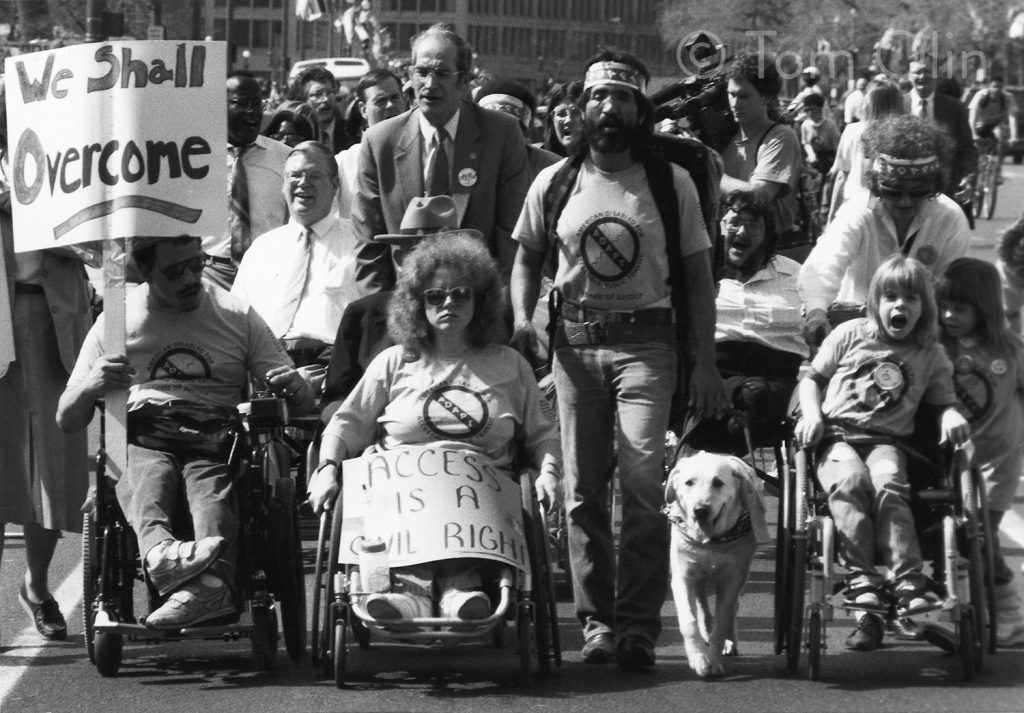
In March of that year, disability activists staged one of the most iconic demonstrations in the history of the movement.
Gathering at the base of the U.S. Capitol, activists abandoned their wheelchairs, crutches and mobility devices and began pulling themselves up the Capitol steps.
The demonstration became known as the Capitol Crawl.
Among the participants was eight-year-old Jennifer Keelan, who famously declared:
“I’ll take all night if I have to.”
The images were impossible to ignore.
For many lawmakers, the demonstration transformed disability rights from an abstract policy debate into a visible reminder of the barriers disabled Americans faced every day. The debate was often fierce, but beneath the arguments about costs, regulation and implementation sat a much simpler question:
Should people with disabilities be guaranteed equal participation in American society?
In July 1990, Congress answered that question with the passage of the Americans with Disabilities Act.

So, what Is the Americans with Disabilities Act?
The Americans with Disabilities Act is a federal civil rights law that prohibits discrimination against people with disabilities across many areas of everyday life.
The law guarantees that people with disabilities have the same opportunities as everyone else to:
- Access employment opportunities
- Purchase goods and services
- Participate in government programmes
- Use public transportation
- Access telecommunications services
- Engage with businesses open to the public
The ADA prohibits discrimination based on disability in the same way other civil rights laws prohibit discrimination based on race, sex, religion or national origin.
Importantly, the ADA is not a benefit programme; eligible individuals do not apply for ADA protection; the law automatically protects people who meet its definition of disability.
Who Is Protected Under the ADA?
The ADA protects individuals who:
- Have a physical or mental impairment that substantially limits one or more major life activities
- Have a record or history of such an impairment
- Are perceived by others as having such an impairment
Disabilities may be visible or invisible.
Examples include:
- Blindness and low vision
- Deafness and hearing loss
- Cerebral palsy
- Autism
- Epilepsy
- Diabetes
- Cancer
- HIV
- Post-traumatic stress disorder
- Major depressive disorder
- Traumatic brain injury
- Mobility impairments requiring wheelchairs, canes or walkers
The ADA recognises that disability exists across a broad spectrum and that accessibility must account for diverse needs rather than a single category of impairment.
What the ADA Actually Does: The Five Titles That Changed America
The Americans with Disabilities Act is often discussed as though it were a single set of accessibility rules, but it is a comprehensive civil rights framework that reaches into nearly every aspect of public life.
The law is divided into five sections, known as Titles, each addressing a different area where people with disabilities have historically faced exclusion.
Understanding these titles is important, but understanding their broader significance is even more important. The ADA did not simply introduce accessibility requirements. It established a legal expectation that disabled people should be able to participate fully in society. That expectation continues to shape how organisations design services, environments and technologies today.
Title I: Employment
Applies to employers with fifteen or more employees.
Requires equal opportunity in:
- Recruitment
- Hiring
- Promotion
- Compensation
- Training
- Benefits
- Workplace activities
Employers must provide reasonable accommodations where appropriate.
Title I transformed disability from a hiring risk into a protected civil rights category.
The question changed from: “Can this person do the job?” to: “Have we created unnecessary barriers preventing them from doing the job?” That distinction remains one of the most important shifts introduced by the ADA.
Despite decades of progress, significant disparities remain. Current UK employment data shows approximately 53% of disabled people are employed compared with around 82% of non-disabled people.
In the United States, employment participation rates among disabled people also remain substantially lower than among non-disabled populations. These figures demonstrate that accessibility remains an ongoing challenge rather than a completed objective.
Forward-thinking organisations increasingly recognise that accessibility is not only about compliance. It is about attracting talent, improving workforce participation and creating environments where all employees can contribute effectively.
The same accessibility principles that support customers also support employees. Accessible interfaces, inclusive technology design and barrier-free interactions improve usability for everyone. Accessibility should not be viewed as a specialist requirement; it should be viewed as part of creating better experiences for all users.
Title II: State and Local Government
Requires state and local governments to ensure equal access to programmes, services and activities.
This includes:
- Education
- Healthcare
- Courts
- Elections
- Public transportation
- Emergency services
Recent Department of Justice rules require state and local government websites, digital services and mobile applications to meet modern accessibility standards, including conformance with WCAG 2.1 Level AA requirements.
Government services increasingly operate through digital channels.
- Citizens apply for benefits online.
- Access healthcare information online.
- Pay taxes online.
- Register to vote online.
- Book appointments online.
So, if those services are inaccessible, exclusion still occurs – the medium has changed, but the outcome has not.
The public sector often sets expectations that influence private-sector accessibility standards. As governments strengthen digital accessibility requirements, organisations across every sector should expect increasing scrutiny of their own digital experiences. Accessibility is rapidly becoming part of mainstream digital governance.
For organisations deploying self-service technologies in public-facing environments, accessibility cannot be viewed as optional functionality. It is increasingly becoming a baseline expectation. Designing accessibility into customer journeys from the outset is significantly easier than attempting to retrofit accessibility later.
Title III: Public Accommodations and Commercial Facilities
Perhaps the most relevant title for modern customer-facing organisations.
Title III applies to:
- Restaurants
- Hotels
- Retail stores
- Banks
- Healthcare providers
- Entertainment venues
- Transportation providers
- Self-service environments
Businesses must provide equal access to goods and services.
The law requires businesses to provide people with disabilities equal access to the goods and services they offer.
When the ADA was introduced, this requirement primarily focused on physical environments.
- Accessible entrances.
- Accessible seating.
- Accessible restrooms.
- Accessible routes.
Today, the interpretation is much broader.
Increasingly, equal access extends to digital experiences, self-service technologies and customer-facing systems.
- A customer ordering food through a kiosk.
- A traveller checking in through an automated terminal.
- A patient accessing a healthcare portal.
- A consumer completing an online purchase.
These experiences increasingly determine whether equal access exists in practice.
Many organisations continue to view accessibility as a compliance exercise focused primarily on physical environments. Yet the fastest-growing area of accessibility litigation now relates to digital services because as participation becomes digital, accessibility responsibilities move with it.
Federal ADA Title III lawsuits regularly exceed 8,000 cases annually, with thousands specifically focused on websites, mobile applications and digital experiences.
Accessibility is increasingly becoming a business-critical capability not because regulators demand it but because customers depend on it.
Few environments illustrate this shift more clearly than self-service technology. For many organisations, kiosks, terminals and automated systems are no longer supplementary channels; they are the primary customer experience.
This creates a significant responsibility: An inaccessible self-service journey can exclude customers just as effectively as an inaccessible entrance. True accessibility requires organisations to consider the entire interaction, not just the physical environment surrounding it.
Title IV: Telecommunications
Title IV requires telecommunications providers to support communication access for individuals with hearing and speech disabilities. This led to the development of Telecommunications Relay Services and other communication technologies that enable equal participation.
Although telecommunications may seem like a specialised topic, the principle behind Title IV remains highly relevant. Communication should never be restricted because a system assumes everyone interacts in the same way.
People communicate differently.
- Some rely on speech.
- Some rely on text.
- Some rely on visual information.
- Some rely on audio information.
Accessibility begins when organisations recognise this diversity.
Many accessibility failures occur because products assume a single method of interaction, whereas modern accessibility requires flexibility so customers can engage using the interaction method that works best for them.
This principle directly influences accessible self-service design.
- Touchscreen-only systems create barriers.
- Audio-only systems create barriers.
- Visual-only systems create barriers.
Inclusive design relies on multiple interaction methods working together.
Title V: Miscellaneous Provisions
Title V contains a range of provisions that support implementation and enforcement of the ADA. These include protections against retaliation, legal remedies and guidance for federal agencies responsible for administering the law.
Although often overlooked, Title V reinforces an important reality. Rights are meaningful only when they can be exercised and protected, and without accountability, accessibility commitments often fail to translate into real-world outcomes.
Individual projects do not drive the most successful accessibility programmes. They are supported by governance, leadership and organisational commitment. Accessibility must be embedded into processes rather than treated as a one-off initiative.
This is one reason why accessibility increasingly requires more than accessible products. It requires strategy, planning, auditing, testing and long-term governance. Organisations that achieve the strongest accessibility outcomes typically approach accessibility as an ongoing capability rather than a compliance exercise.
Why Congress Expanded the ADA: The ADA Amendments Act and the Expanding Definition of Disability
When the Americans with Disabilities Act became law in 1990, disability advocates celebrated a historic victory. For the first time, people with disabilities had comprehensive civil rights protections. Yet within a decade, concerns began to emerge.
A series of court decisions gradually narrowed the definition of disability, making it increasingly difficult for some individuals to qualify for protection under the law.
Cases frequently focused less on whether discrimination had occurred and more on whether an individual was “disabled enough” to be covered. Many disability rights advocates argued that this was fundamentally at odds with the ADA’s original purpose.
The law had been created to remove barriers and prevent discrimination. Instead, legal debates increasingly centred on eligibility.
Congress responded in 2008 by passing the ADA Amendments Act (ADAAA), one of the most significant updates in the history of disability rights legislation.
The purpose was clear: Restore the broad protections originally intended by the ADA.

THE ADAAA provided a broader understanding of disability
The ADAAA acknowledged that disability is far more complex and diverse than many people assume and thus significantly expanded how disability is defined. The legislation clarified that the term “disability” should be interpreted broadly and inclusively.
It expanded the concept of major life activities to include not only everyday activities such as walking, seeing, hearing, learning and working but also major bodily functions.
Key changes included:
Expanded Major Life Activities
Major life activities were broadened to include major bodily functions, including:
- Immune system function
- Neurological function
- Respiratory function
- Digestive function
- Endocrine function
One of the most common accessibility mistakes organisations make is designing for the disabilities they can easily see.
Wheelchair access remains critically important.
But accessibility must also consider:
- Blind and low-vision users
- Deaf and hard-of-hearing users
- Cognitive impairments
- Neurodivergent users
- Mental health conditions
- Temporary impairments
- Age-related impairments
True accessibility requires a much broader perspective. This is why Storm Interface advocates for inclusive design approaches that support multiple interaction methods rather than relying on a single accessibility solution, because no single technology addresses every accessibility need
The goal is to create flexible experiences that support the widest possible range of users.
Mitigating Measures Cannot Be Considered
One of the most important provisions within the ADAAA addressed mitigating measures.
Before the amendments, courts sometimes considered whether medication, prosthetics, hearing aids or other treatments reduced the impact of an impairment when determining disability status. This often created a paradox.
Individuals who successfully managed their condition could find themselves excluded from protection because they appeared less affected.
The ADAAA corrected this. With limited exceptions, courts can no longer consider the beneficial effects of mitigating measures when determining whether someone has a disability.
In other words, the focus returns to the condition itself rather than how effectively a person manages it.
The ADAAA recognised an important truth: People should not lose legal protections because they successfully use tools, technologies or treatments that help them participate in society.
Accessibility is often misunderstood as something required only for individuals with severe or highly visible disabilities. In reality, many people use assistive technologies, accommodations or coping strategies every day.
Their need for accessible systems does not disappear simply because they have found ways to navigate barriers.
The same principle applies to self-service design. Accessible technologies should work alongside assistive technologies rather than assuming they eliminate accessibility needs altogether. The most inclusive systems are those designed to integrate seamlessly into diverse user experiences.
Episodic Conditions Are Protected
The ADAAA also clarified protections for conditions that are episodic or in remission.
Examples include:
- Epilepsy
- Multiple sclerosis
- Cancer in remission
- Mental health conditions
- Certain neurological disorders
Under the amendments, these conditions are protected if they would substantially limit a major life activity when active.
This was another significant development, as many disabilities are not constant, visible or fluctuate in severity. The ADAAA recognised that accessibility should not depend on whether a disability is immediately obvious to others.
The ADAAA moved accessibility away from assumptions and stereotypes. It moved accessibility away from assumptions and stereotypes and back toward the central question:
Has discrimination occurred?
The focus shifted toward understanding how people actually experience the world because accessibility strategies built around visible disabilities alone will always leave people behind.
Inclusive design requires organisations to consider a broad spectrum of experiences, including conditions that may not be immediately apparent.
Accessible self-service experiences should never assume that all users interact with technology in the same way.
Multiple pathways, alternative inputs and flexible interaction models help create systems that accommodate diverse needs without requiring users to disclose or justify their disability.
Why Accessibility Has Become a Boardroom Issue
For many years, accessibility was viewed primarily as a compliance topic. Responsibility often sat with legal teams, facilities managers or specialist accessibility professionals. That approach is rapidly becoming outdated.
Accessibility today influences:
- Revenue
- Customer experience
- Brand reputation
- Procurement
- Digital transformation
- Workforce participation
- Innovation
- Regulatory risk
The organisations leading in accessibility increasingly view it as a strategic capability rather than a compliance obligation.

Accessibility is a $13 Trillion Market Opportunity
The ADA’s importance continues to grow because disability is far more common than many organisations realise.
According to the World Health Organisation, approximately 1.3 billion people worldwide experience significant disability – That represents roughly 16% of the global population or the combined population of Europe and North America. If disability were a country, it would be larger than both India and China individually, making it the world’s largest population group.
In the United States, approximately 61 million people live with a disability. In the United Kingdom, around 16.8 million people are classified as disabled, representing approximately one quarter of the population.
These numbers alone should command attention, yet the commercial implications are even more significant. The combined spending power of people with disabilities and their families exceeds $13 trillion globally. In the UK alone, the Purple Pound is estimated to exceed £474 billion annually.
Disabled consumers represent one of the largest underserved markets in the world. Accessibility is not about accommodating a small minority; it is about serving a substantial portion of society.
Accessibility decisions directly influence:
- Market reach
- Revenue growth
- Customer loyalty
- Brand trust
- Competitive differentiation
When organisations create inaccessible experiences, they are not merely creating compliance risk; they are excluding potential customers.
For organisations investing in self-service technologies, accessibility directly affects whether customers can independently engage with services. Every inaccessible kiosk, payment terminal or digital interaction creates friction that may prevent customers from completing transactions or accessing services.
The Disability Employment Gap
One of the things George Bush said in his ADA speech in 1990 was “Many of our fellow citizens with disabilities are unemployed, they want to work, and they can work…They have only one request: The chance to prove themselves.
36 years later, the disability employment gap remains significant, with UK employment rates:
- Disabled people: ~53%
- Non-disabled people: ~82%
In the United States:
- Employment-population ratio remains significantly lower among disabled workers.
Accessibility is therefore not only a customer experience issue; it is also a workforce participation issue.
These figures highlight a critical reality: The ADA may have transformed rights. It did not eliminate barriers. Accessibility remains unfinished work, and legal protections alone do not guarantee equal participation.
The organisations that embrace accessibility are often better positioned to attract talent, improve employee experiences and build more inclusive workplaces. Accessibility increasingly influences employer reputation as well as customer reputation.
Accessible technology benefits employees and customers alike. When accessibility is designed into systems from the beginning, organisations create environments where more people can participate effectively.

The Rising Cost of Inaccessibility
Accessibility litigation continues to increase. Federal ADA Title III lawsuits regularly exceed 8,000 annually. Thousands of these cases focus specifically on digital accessibility.
- Websites.
- Mobile applications.
- Online services.
- Customer portals.
- Self-service systems.
Recent trends also indicate growing numbers of repeat defendants and increased use of technology to identify accessibility violations at scale.
Accessibility expectations are increasing faster than many organisations realise and the legal and reputational consequences of inaccessible experiences continue to grow.
Accessibility is becoming a core element of risk management and the organisations facing the greatest challenges are often those that treat accessibility as something to address after deployment rather than during planning.
The most cost-effective accessibility strategy is prevention. Accessibility is significantly easier and less expensive to design into systems from the outset than to retrofit after deployment. This principle sits at the heart of Storm Interface’s consultancy-led approach to accessibility.
Why Digital Accessibility and Self-Service Technology Have Become the New Accessibility Frontier
When the ADA was signed in 1990, the internet was still in its infancy. There were no smartphones. No mobile banking apps. No self-ordering kiosks. No online healthcare portals. No digital check-in systems.
The barriers disability advocates fought to remove were overwhelmingly physical.
- Stairs.
- Narrow doorways.
- Inaccessible transport.
- Buildings that excluded people before they even reached the service they needed.
Today, those barriers have not disappeared, but increasingly they have moved because technology has now become infrastructure.
In 2026:
- Websites are infrastructure.
- Apps are infrastructure.
- Kiosks are infrastructure.
- Digital identity systems are infrastructure.
- AI interfaces are infrastructure.
That is why accessibility has become existential. For millions of people, access to essential services now depends on technology rather than architecture. As a result, digital accessibility has become one of the most significant accessibility challenges of our era
- A customer may never encounter a staircase but still be unable to complete a purchase because a website is incompatible with screen readers.
- A patient may never encounter an inaccessible entrance but still be unable to book an appointment because a healthcare portal cannot be navigated by keyboard.
- A traveller may reach the airport independently but be unable to use a self-service terminal because it relies entirely on touchscreen interaction.
The nature of accessibility has evolved, but the principle has not.
Equal participation remains the goal, and the challenge is ensuring technology does not create the next generation of barriers.
Equal access remains the goal, and the only thing that has expanded is the environments requiring accessibility.
The Scribd Case: Digital exclusion is still exclusion.
One of the most important disability rights cases of the digital era involved Scribd, a digital library offering access to books, audiobooks and documents. Blind users reported that Scribd’s platform could not be accessed using screen readers, the software many blind people rely upon to interact with websites and applications.
Among those advocating for change was disability rights lawyer Haben Girma. Reflecting on the case, she explained:
“Blind people navigate websites and apps through screen readers, software converting visual information to speech or physical dots popping up on a connected Braille computer.”
Girma and her colleagues initially invited Scribd to collaborate on improving accessibility. When no response came, legal action followed. Scribd argued that the ADA applied only to physical places. The court disagreed, and their ruling helped establish a principle that continues to shape accessibility expectations today: Digital spaces can create barriers every bit as real as physical ones.
The ADA’s promise of equal access does not disappear when services move online. If a person cannot independently access a digital service, exclusion still exists.
Many organisations still think of accessibility through a physical accessibility lens, but the reality is that websites, applications, kiosks and digital platforms increasingly represent the primary route to services. An inaccessible digital experience can prevent participation just as effectively as an inaccessible building.
Storm Interface has long recognised that accessibility cannot be separated into physical and digital categories. True accessibility requires the entire user journey to be considered, from interface design and hardware interaction through to software, navigation and user experience.
The objective is not simply compliance; it is independent participation.
The Rise of ADA Enforcement in Digital Experiences – Accessibility and Self-Service Technology
The barriers of the 21st century are increasingly digital. For someone trying to order food from a kiosk, check in at an airport, pay a bill, buy a train ticket or access healthcare, accessibility now depends as much on technology design as physical infrastructure.
Digital accessibility litigation has reached unprecedented levels. Federal ADA Title III lawsuits consistently exceed 8,000 cases annually. Many organisations interpret rising ADA litigation as evidence of an increasingly aggressive legal environment, and that is an understandable conclusion, but it is also incomplete.
The more important question is not why lawsuits are increasing; it is why so many accessibility barriers continue to exist more than three decades after the ADA became law.
Federal ADA Title III lawsuits have exceeded 8,000 annually in recent years, with thousands focused specifically on digital accessibility, including websites, mobile applications, online services and customer-facing technologies. Yet litigation itself is not the story.
Every accessibility lawsuit begins with the same underlying reality: A person attempted to participate in everyday life and encountered a barrier that others did not face.
Few sectors illustrate this shift more clearly than self-service technology.
Historically, that barrier might have been a staircase. Today, it is increasingly a digital experience.
- A checkout process that cannot be completed with a screen reader.
- A healthcare portal that cannot be navigated using a keyboard.
- A self-service kiosk that cannot be used independently by a blind customer.
- An online application form that excludes people using assistive technology.
Common issues include:
- Missing alternative text
- Inaccessible forms
- Poor keyboard navigation
- Screen reader incompatibility
- Checkout barriers
- Inaccessible mobile applications
Recent trends also show:
- Increased repeat litigation
- Growth in AI-assisted filings
- Greater regulatory scrutiny
Across retail, quick-service restaurants, healthcare, banking, airports and hospitality, self-service kiosks have become a primary point of interaction.
For many customers, the kiosk is no longer an optional convenience; it is the service, and this creates a critical responsibility.
If self-service systems are inaccessible, organisations risk replacing one barrier with another.
A person who previously received assistance from staff may now face a touchscreen interface they cannot see, hear or physically operate.
True accessibility requires much more than physical placement. It requires systems that support independent use.
That includes:
- Tactile navigation controls
- Audible guidance
- Screen-reader compatibility
- Alternative input methods
- Voice interaction
- Accessible reach ranges
- Braille and tactile markings
- Compatibility with assistive technologies
Accessibility is most effective when adopted as a primary system specification rather than added as a retrofit after deployment.
The most successful organisations design accessibility from the beginning; they do not attempt to bolt it on later.
Why Digital Cases Are Increasing
There is another reason digital accessibility litigation has accelerated. Digital barriers are easier to identify at scale.
- A physical accessibility issue generally requires someone to visit a location.
- A digital accessibility issue can often be detected remotely.
- Accessibility auditors, advocacy organisations and law firms can review websites, applications and digital services from anywhere.
- Automated testing tools can identify common accessibility failures across thousands of sites.
This has fundamentally changed enforcement dynamics as an inaccessible entrance might affect one location whereas an inaccessible kiosk may affect many customers, every day.
The scale of impact is dramatically larger. As organisations become increasingly digital, accessibility failures become increasingly visible.
The Future of ADA Litigation
The next wave of accessibility litigation is likely to be automated customer journeys. As organisations increasingly deploy:
- Self-service kiosks
- AI assistants
- Voice interfaces
- Automated check-in systems
- Digital identity platforms
- Intelligent customer service systems
Accessibility expectations will move with them. The legal principle established by the ADA has remained remarkably consistent for more than three decades: People should have equal access to goods, services and opportunities.
The organisations facing the greatest future risk are not necessarily those with the oldest systems; they are often those deploying the newest systems without considering accessibility from the outset.
History suggests the courts will continue to focus on a simple question: Can disabled people participate on equal terms?
Why Self-Service Technology Has Become the Accessibility Battleground
Few developments have transformed customer experiences more dramatically than self-service technology. Across retail, quick-service restaurants, airports, banking, healthcare and hospitality, self-service has become the primary service channel. For many users, the kiosk is no longer an alternative; it is the service itself which dramatically raises accessibility requirements.
Customers increasingly:
- Order food from kiosks
- Check into hospitals using terminals
- Purchase tickets through self-service machines
- Navigate airports through automated systems
- Access banking services through digital channels
This creates an important accessibility challenge because historically, if a system failed, customers could often rely on staff assistance. Today, many organisations are actively reducing human interaction as part of efficiency and digital transformation programmes. As a result, accessibility can no longer depend on staff intervention – it must be built directly into the experience itself.
The shift to self-service has fundamentally changed how accessibility must be delivered because every self-service deployment becomes an accessibility decision. An inaccessible system may unintentionally exclude customers from completing essential tasks independently.
This is precisely why Storm Interface has focused on accessible self-service technologies for decades. The challenge is not simply helping organisations deploy technology; it is ensuring that technology remains usable by the widest possible range of people.
The Problem with Touchscreen-Only Accessibility
Touchscreens have become the dominant interface across self-service environments.
Their popularity is understandable. They are:
- Flexible.
- Visually engaging.
- Easy to update.
- Cost-effective.
Yet touchscreen-only experiences can create significant accessibility barriers.
- For blind and low-vision users, a flat touchscreen often provides no tactile reference points.
- For users with dexterity impairments, precise gestures may be difficult or impossible.
- For users with cognitive impairments, complex navigation structures may create unnecessary friction.
A touchscreen may appear modern and intuitive, but intuitive for whom? This is one of the most important accessibility questions organisations can ask. Technology that works well for one group of users may create barriers for another. Accessibility cannot be judged solely by what appears innovative or visually appealing; it must be evaluated based on whether users can independently complete tasks. That is why we strongly advocate for multi-modal interaction, because accessibility cannot depend solely on touchscreens and accessible kiosks should provide:
- Tactile navigation
- Audio guidance
- Screen reader support
- Hearing loop compatibility
- Alternative input methods
- Voice interaction
- Reach compliance
- Physical controls
Accessible Reach Ranges
Operable controls must generally be located between:
- 15 inches
- 48 inches
from floor level.
Operable Parts
Users must be able to operate controls:
- With one hand
- Without tight grasping
- Without twisting
- Without excessive force
Accessible Inputs
Accessible systems should support:
- Tactile controls
- Audible feedback
- Braille identifiers
- Alternative input methods
Assistive Technology Compatibility
Systems should integrate effectively with:
- Screen readers
- Alternative keyboards
- Voice systems
- Assistive software
Accessibility must be engineered into the user journey.
What Accessible Self-Service Actually Looks Like
Accessible self-service environments often include:
- Audio navigation
- Tactile controls
- Braille identifiers
- Hearing loop compatibility
- Alternative input methods
- Voice activation
- Accessible reach ranges
- Screen reader support
- Clear interaction flows
Each element addresses different user needs, and together they create experiences that support independence. The objective is not to provide special treatment; it is to ensure everyone can use the service.
Many accessibility failures occur because organisations treat accessibility as a single requirement rather than an integrated design philosophy. Accessibility is not a feature; it is a system.
This systems-based approach underpins Storm Interface’s accessibility portfolio. Accessible hardware, software integration, consultancy and governance work together to deliver meaningful outcomes rather than isolated accessibility features.
Accessibility Is About Independence
The ultimate measure of accessibility is whether people can participate independently, confidently and with dignity.
This distinction separates organisations that merely comply from organisations that genuinely include.
Accessibility is not about creating special experiences for a minority. It is about ensuring everyone can participate equally.
That principle inspired the disability rights movement. It inspired the ADA, and it continues to shape the future of inclusive design.
How Leading Organisations Are Building Accessible Self-Service Experiences
Forward-thinking organisations increasingly recognise that accessibility must be embedded from the earliest stages of design.
The LG Lesson
One of the strongest lessons in accessibility comes from organisations that build it into projects from the beginning. LG Electronics‘ accessibility initiatives illustrate this principle clearly. Reflecting on kiosk accessibility, one industry accessibility expert observed:
“Getting accessibility early is key. It’s very difficult to go back and fix things.”
That statement applies far beyond kiosks. Accessibility retrofits are often:
- More expensive
- More disruptive
- More complex
- Less effective
The earlier accessibility is considered, the greater the likelihood of success. Accessibility is most effective when adopted as a primary system specification, and the most expensive accessibility decision is often the decision to delay accessibility.
Storm Interface’s consultancy approach reflects this reality: Accessibility should be addressed during strategy, procurement and design phases rather than after deployment.
Independence in Action: McDonald’s and Schiphol Airport
Accessibility becomes meaningful when it enables independence. Two examples illustrate this particularly well. At McDonald’s USA, accessible ordering solutions were introduced to support independent ordering experiences for customers with visual impairments.
As Kelsey Hall, Senior Director of Digital Customer Engagement, explained:
“Implementing new options for our customers to be able to order independently is vitally important to ensuring the restaurant experience is accessible for everyone.”
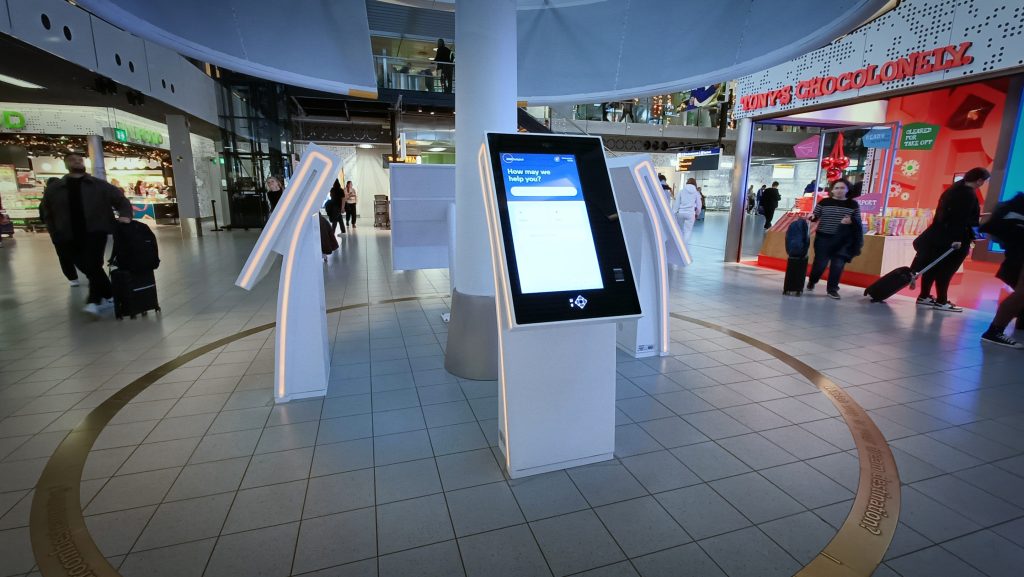
Similarly, Schiphol Airport deployed accessible passenger assistance kiosks featuring audio navigation, hearing loop support and tactile controls.
The objective was not merely accessibility compliance, it was helping travellers access information and services independently. The most successful accessibility initiatives focus on outcomes rather than requirements.
Accessibility is ultimately measured by independence because customers rarely judge experiences based on compliance standards; they judge them based on whether they can complete the task they came to perform.
This focus on independence sits at the centre of Storm Interface’s accessibility philosophy. Whether through AudioNav, accessible keypads, voice activation controls or accessibility consultancy, the objective remains the same: Helping people participate independently, confidently and with dignity.
The cost of retrofitting accessibility and common accessibility mistakes
Accessibility failures rarely result from bad intentions; they usually result from accessibility being considered too late.
- Treating accessibility as a legal checkbox
- Designing only for wheelchair users
- Ignoring visual impairments
- Ignoring hearing impairments
- Relying exclusively on touchscreens
- Testing without disabled users
- Delaying accessibility until deployment
Many organisations still approach accessibility reactively.
This creates higher costs, longer deployment timelines, greater compliance risk, and poorer user experiences. Accessibility is most effective when adopted as a primary system specification. The earlier accessibility is considered, the more successful outcomes become.
The Future of Accessibility Is Strategic
The ADA transformed accessibility from an aspiration into a legal right, and thirty-six years after the signing of the ADA, remarkable progress has been achieved.
Buildings are more accessible, employment protections are stronger, and digital accessibility awareness continues to grow, yet significant barriers remain:
- Disability employment rates remain substantially lower than those of non-disabled populations.
- Digital accessibility lawsuits continue to rise.
- Millions of people still encounter unnecessary barriers in everyday life.
The next chapter of accessibility will not be defined solely by legislation; it will be defined by how organisations design products, services and technologies that enable independence from the outset.
The ADA established the legal foundation; the responsibility to build truly inclusive experiences belongs to all of us.
For organisations investing in self-service technology, digital transformation and customer experience innovation, accessibility can no longer be treated as an afterthought.
It must become a strategic priority because accessibility is not a feature – it is a right.
The next challenge is ensuring those rights remain meaningful in increasingly digital environments.
The organisations leading in accessibility are no longer asking: “Are we compliant?”
They are asking: “Can everyone use our services independently?”
That is a fundamentally different question, and it is one that will increasingly shape technology, procurement, customer experience and digital transformation strategies for years to come.
The future of accessibility will be determined by design decisions as every website, kiosk, application and digital service represents an opportunity either to remove barriers or create them. The organisations that succeed will be those that view accessibility not as a feature to add, but as a strategic capability to embed throughout the entire customer journey.
Because the ADA was created to remove barriers. The barriers have changed, but the responsibility has not, and this is also why we’re seeing accessibility regulation expanding globally.
ADA, EAA and the Future of Accessibility
Key frameworks include:
- Americans with Disabilities Act (ADA)
- European Accessibility Act (EAA)
- EN 301 549
- WCAG 2.1
- WCAG 2.2
Organisations increasingly require a unified accessibility strategy rather than separate compliance initiatives.
How EAA and ADA change what procurement teams must ask about self-service kiosk accessibility
For many organisations, accessibility discussions begin too late.
- A new kiosk has already been selected.
- A digital platform has already been purchased.
- A customer experience has already been designed.
- The technology is ready for deployment.
Only then does someone ask: “Is it accessible?”
At that point, accessibility often becomes a remediation exercise.
- Teams scramble to identify barriers.
- Budgets increase.
- Timelines slip.
- Workarounds replace good design.
- Opportunities are missed.
This pattern is surprisingly common, and it reveals one of the biggest misconceptions in accessibility. Many organisations treat accessibility as an implementation issue. In reality, accessibility is a procurement issue.
Long before a customer interacts with a kiosk, website, payment terminal or digital service, hundreds of decisions have already been made.
- Technology choices.
- Supplier choices.
- Design choices.
- Integration choices.
Every one of those decisions influences accessibility outcomes, and the organisations achieving the strongest accessibility results understand this.
They recognise that accessibility is not something added at the end of a project; it is something specified at the beginning.
Accessibility Is a Procurement Decision Before It Is a Design Decision
Every procurement process shapes the future accessibility of a system.
- The products selected.
- The suppliers engaged.
- The requirements defined.
- The testing standards applied.
- The governance expectations established.
All influence whether accessibility becomes embedded in the final solution. This is particularly important in self-service environments.
- A kiosk manufacturer may claim compliance.
- A software vendor may claim accessibility.
- An integration partner may assume responsibility lies elsewhere.
The result can be fragmented accountability and inconsistent outcomes as accessibility falls into the gaps between suppliers.
Many accessibility failures are not caused by poor intentions; they are caused by poor specifications. Accessibility problems become dramatically more expensive to solve once technology has already been selected and deployed, so the earlier accessibility requirements are defined, the lower the cost and complexity of achieving inclusive outcomes.
Storm Interface frequently works with organisations during the specification and procurement phases because this is where accessibility has the greatest impact. The goal is not simply to identify accessibility barriers but to prevent them from being created in the first place.
Questions Every Procurement Team Should Be Asking
If accessibility is genuinely important, procurement teams need to ask better questions.
Not: “Does this product have accessibility features?” But: “Can disabled users independently complete key tasks using this product?”
That distinction changes everything. Organisations should ask:
- Has the solution been tested by disabled users?
- Which accessibility standards does it support?
- How is accessibility maintained over time?
- Does it support multiple interaction methods?
- Does it integrate with assistive technologies?
- How are accessibility updates managed?
- What evidence exists beyond supplier claims?
- Can accessibility performance be demonstrated?
Accessibility should be treated with the same rigour as cybersecurity, privacy or safety because accessibility failures carry real consequences.
Accessibility cannot be validated through marketing claims alone. Many products are described as accessible despite only addressing a narrow range of accessibility needs.
A solution may support wheelchair access while remaining inaccessible to blind users. It may support visual accessibility while creating barriers for users with dexterity impairments.
One of Storm Interface’s core beliefs is that accessibility should never be reduced to a single feature or compliance checkbox; it must be evaluated holistically.
True accessibility requires understanding the full spectrum of user needs and ensuring technology supports independent participation for as many people as possible.
Why Retrofitting Accessibility Is So Expensive
The history of accessibility is filled with examples of organisations attempting to retrofit inclusion after deployment. Sometimes this happens because:
- accessibility was overlooked.
- it was deprioritised.
- nobody recognised the barriers until users encountered them.
The outcome is usually the same.
Retrofitting accessibility is usually:
- Harder.
- More expensive.
- More disruptive.
- Often less effective.
As one accessibility expert involved in LG’s kiosk accessibility programme observed: “Getting accessibility early is key. It’s very difficult to go back and fix things” in virtually every technology environment.
Accessibility is most effective when adopted as a primary system specification. Every accessibility decision deferred today becomes a larger accessibility challenge tomorrow. Organisations that integrate accessibility into planning and procurement reduce future costs while improving user outcomes.
Storm Interface’s consultancy-led approach is built around this principle. Accessibility should be considered before deployment, not after complaints, and the earlier accessibility enters the conversation, the more successful the outcome is likely to be.
Beyond Compliance: The Future of Accessibility
Alice Wong, founder of the Disability Visibility Project, offered one of the most important observations about accessibility when she reflected on the ADA’s legacy:
“The ADA is not a magic wand.” She is right. The ADA transformed rights.
It did not:
- instantly transform culture.
- automatically eliminate barriers.
- ensure inclusion.
Those outcomes require ongoing effort, leadership, intentional design and increasingly, they require organisations to rethink how technology is developed and deployed.
The future belongs to organisations that treat accessibility as a strategic capability rather than a compliance requirement.
Those organisations will:
- Reduce risk.
- Reach broader audiences.
- Strengthen customer loyalty.
- Improve employee experiences.
- Build more resilient services.
This is why Storm Interface’s mission extends beyond accessible hardware. We believe accessibility is most effective when supported by strategy, consultancy, governance and long-term partnership. Technology alone cannot deliver accessibility. People, processes and design decisions matter just as much.
The ADA’s Promise in the Digital Age
Thirty-five years after President George H. W. Bush signed the Americans with Disabilities Act into law, its central promise remains unchanged.
- Equal participation.
- Equal opportunity.
- Equal access.
The ADA transformed how society thinks about disability.
- It challenged the assumption that exclusion was inevitable.
- It established accessibility as a civil right.
- And it laid the foundation for generations of progress.
Yet the work remains unfinished.
The barriers disability advocates fought in 1990 have not disappeared; they have simply evolved.
Today, they increasingly exist within websites, mobile applications, kiosks, customer portals and self-service technologies.
The challenge facing organisations is no longer simply making buildings accessible. It is ensuring that digital and self-service experiences remain accessible too.
References
- https://www.britannica.com/topic/Americans-with-Disabilities-Act
- https://wearepurple.org.uk/the-purple-pound/
- https://www.archives.gov/calendar/ada-anniversary
- https://www.nytimes.com/2020/07/13/us/disability-reveal.html
- https://www.nytimes.com/2020/07/20/us/judy-heumann-alice-wong-haben-girma-disability-activists.html
- https://www.nytimes.com/2020/07/22/us/ada-disabilities-act-history.html
- https://www.nytimes.com/2020/07/22/us/504-sit-in-disability-rights.html
- https://www.nytimes.com/2023/10/04/opinion/disabilities-act-lawsuits-court.html
- https://dcyf.wa.gov/accessibility-equity/about-ada
- https://www.ada.gov/
- https://www.eeoc.gov/laws/guidance/fact-sheet-eeocs-final-regulations-implementing-adaaa
- https://www.hhs.gov/civil-rights/for-individuals/disability/index.html
- https://www.law.cornell.edu/uscode/text/42/chapter-126
- https://www.access-board.gov/
- https://www.jstor.org/stable/j.ctt14bt7kv
- Frieden, Lex. Roots of the Movement that Produced the ADA.
- Davis, Lennard J. Enabling Acts: The Hidden Story of How the Americans with Disabilities Act Gave the Largest US Minority Its Rights.
- Switzer, Jacqueline Vaughn. Disabled Rights: American Disability Policy and the Fight for Equality.
- Mayer, Arlene. The History of the Americans with Disabilities Act: A Movement Perspective.
- https://dredf.org/
- https://www.ncd.gov/
- Towards Independence (1986) – National Council on Disability
- https://www.oyez.org/cases/1998/98-536
- https://www.oyez.org/cases/2003/02-1667
- https://www.oyez.org/cases/2000/99-1240
- National Federation of the Blind v. Target Corp. – Disability Rights Advocates
- Barden v. City of Sacramento – Disability Rights Advocates
- European Accessibility Act – European Commission
- EN 301 549 Accessibility Requirements
- Acemoglu, Daron & Angrist, Joshua. Consequences of Employment Protection? The Case of the Americans with Disabilities Act.
- DeLeire, Thomas. The Wage and Employment Effects of the Americans with Disabilities Act.
- Andara, Kennedy; Neal, Anona; Khattar, Rose. Disabled Workers Saw Record Employment Gains in 2023, But Gaps Remain.
- https://www.who.int/news-room/fact-sheets/detail/disability-and-health
- https://www.ons.gov.uk/
- https://library.law.howard.edu/civilrightshistory/disabled/ada
- https://scholar.google.com/scholar_case?case=11295524924367699420&q=bragdon+v+abbott&hl=en&as_sdt=20006
- https://scholar.google.com/scholar_case?case=13760573982282365191&q=murphy+v+united+parcel+service+inc&hl=en&as_sdt=20006
- https://adaanniversary.org/logos/
- https://adaanniversary.org/countdown/#V
- https://abilitymagazine.com/celebrating-36-years-of-the-americans-with-disabilities-act-and-its-informational-network/
- https://disability.lacity.gov/about/events/ada-35/ada-35-history-and-timeline
- https://tomolincollection.com/