
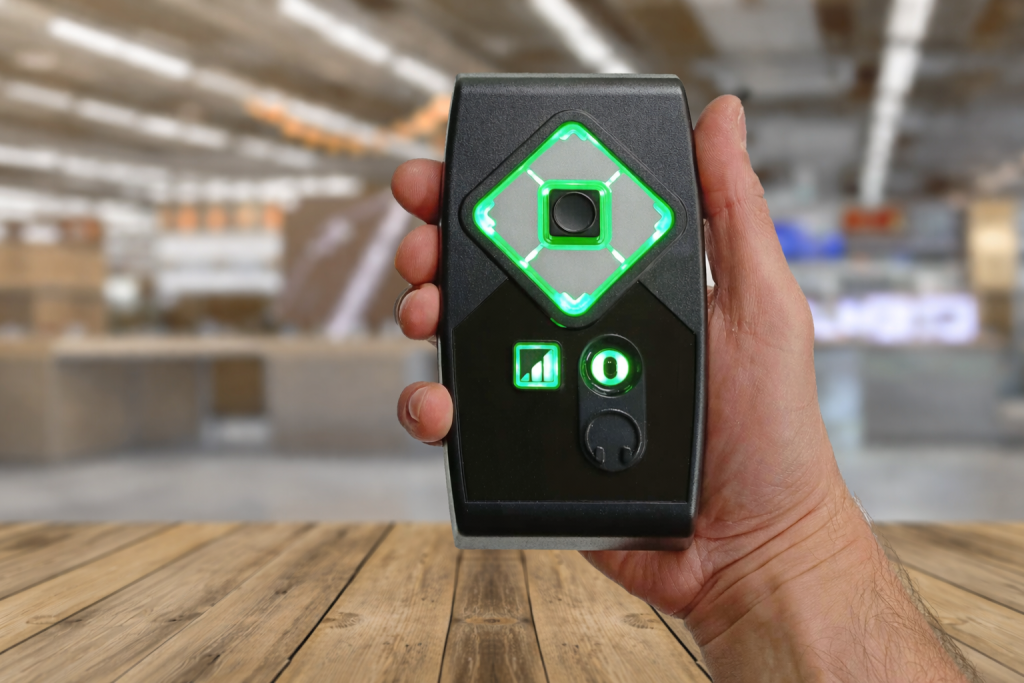
Self-service kiosks have become a familiar part of everyday life, whether you’re checking in at an airport, ordering food, or paying for parking. But for many people, these machines aren’t as easy to use as they should be.
At Storm Interface, we see accessibility not as a “nice to have”, but as something that should be built into every user experience from the outset. The good news? Companies don’t always need to start from scratch to get there.
Why Accessibility in Kiosks Really Matters
Let’s start with the bigger picture. Around 1.3 billion people worldwide, roughly 1 in 6 of us, live with some form of disability. That’s a huge number of people who may struggle with standard kiosk interfaces.
From a business perspective, making kiosks accessible simply makes sense:
• You open your services up to a much wider audience
• You improve customer experience and brand perception
• You stay on the right side of regulations like the Americans with Disabilities Act (ADA) and the European Accessibility Act (EAA)
But beyond compliance and commercial benefits, there’s a more human point here. Accessible kiosks give people the ability to use services independently, without needing to ask for help, and that’s incredibly important.
So, What Actually Makes a Kiosk Accessible?
Accessibility isn’t just one feature: it’s a combination of thoughtful design choices working together.
A well-designed accessible kiosk will typically include:
• Tactile controls that can be easily located and used
• Audio guidance for those who are visually impaired
• Clear, consistent on-screen navigation
• A design that works for people using wheelchairs
• Good contrast and readable text on screen
Ultimately, it’s about making sure that as many people as possible can use the kiosk confidently and independently.
Retrofitting: A More Practical Way Forward
If you’ve already got kiosks out in the field, the idea of replacing them all may simply not be an option, which is where retrofitting comes in. Rather than ripping out existing hardware and starting again, retrofitting allows you to add accessibility features to your existing machines.
Organisations choose this route because it’s far more cost-effective than full hardware replacement, avoids major disruption to operations, helps meet accessibility requirements more quickly, and offers a more sustainable option by extending the life of your kiosks. In many cases, it’s simply the most sensible and efficient way to move forward.
A Simple Retrofit Solution: Externally Mounted AudioNav™
This is exactly the kind of challenge we’ve designed our solutions to address.
The Storm Externally Mounted AudioNav™ is purpose-built for retrofitting existing kiosks, making accessibility upgrades straightforward and practical.
So, what does it do? The Externally Mounted AudioNav™ provides a tactile, audio-enabled interface for navigating and selecting on-screen information and options. This enables kiosk users, particularly those with visual impairments, to interact with kiosks independently. Physical keys and spoken prompts work together to guide the user through each step of the process.
And because it’s externally mounted, it’s ideal for retrofit projects:
• It can be added to existing kiosks without redesigning the enclosure
• Installation is quick and straightforward and can be done in the field
• It connects easily via USB
• It includes a built-in audio processor and microphone support
• It’s designed to be robust and vandal-resistant, perfect for public environments
In short, it’s a practical way to make a real difference, without overcomplicating things.

A Whole Accessibility Package
Accessibility isn’t something to put off for later; it’s something that matters right now. Retrofitting existing kiosks with solutions like the Externally Mounted AudioNav™, combined with the JAWS for Kiosk screen reader, is a straightforward way to make services more inclusive, while also meeting regulatory requirements and improving the overall user experience.
And it doesn’t stop at hardware. We can support you with a complete accessibility package, from an initial accessibility audit, through software and hardware consultancy, right the way to installation, training, and ongoing aftercare. The aim is simple: to help you get accessibility right first time and to keep it working effectively long into the future.